Inside The Rise Of Competitive Fitness Spurred By Hyrox
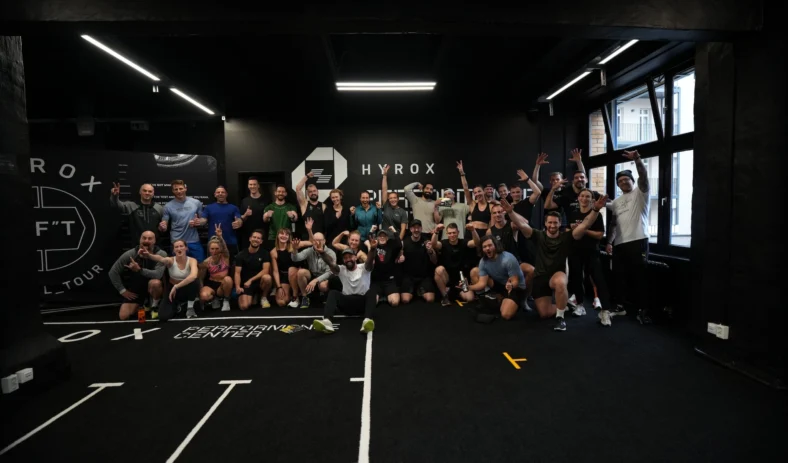
As fitness-competition phenomenon Hyrox scales globally, a wave of challengers — from startups to legacy gym brands — are racing to define what comes next
Competitive fitness is entering a pivotal stretch.
CrossFit announced in March that its CEO Don Faul would be stepping down, ending a four-year stint and adding more uncertainty to the brand as it seeks a new owner. Bruce Edwards, CrossFit’s former chief operating officer from 2013 to 2019, took over as Faul’s replacement in May.
As CrossFit searches for stability, Hyrox is thriving. The fitness-racing phenomenon is selling out events in hours, forming partnerships with brands like Puma and embedding its programming into gyms around the world.
After that, however, things get less clear.
A crop of new entrants — along with established brands — is racing to capitalize on the boom by staging competitions of their own. Whether they can recreate the magic of Hyrox, though, remains to be seen.
Hyrox Builds a Global Platform
Hyrox has caught fire, in large part thanks to creating a standardized, highly accessible fitness racing format — eight one-kilometer runs, each of which is interspersed with a different functional workout station. This creates a “marathon of fitness” feel, as the brand’s founder and CEO Christian Toetzke has put it.
Dr. Adam Storey of the Sports Performance Research Institute of New Zealand at AUT said the sport’s standardization gives Hyrox credibility on par with other sports.
“That’s what allows data to accumulate and insights to deepen over time,” Dr. Storey said. “It’s the same principle that made marathon running or Olympic lifting global benchmarks.”
Dr Storey is part of the Hyrox Scientific Council, a panel of academic experts tasked with conducting research and excavating the sport of Hyrox as the brand seeks inclusion in the Olympics as early as 2032.
But Hyrox’s rise has been driven by more than just event-day excitement and Olympic ambitions.
The brand has quickly embedded its training into gyms around the world, including partnerships with Orangetheory, F45 Training and Gold’s Gym, among many other operators. Peloton has also launched a 12-week Hyrox training program for its members as part of a broader digital partnership between the two sides.
“It’s exciting to see a practical application in a race environment of what our members have been doing for years,” Peloton vice president of fitness programming Robin Arzón has told Athletech News. “For the hybrid athlete who loves to run, lift, and push limits: this is the future.”
These partnership efforts have been key in turning Hyrox into a sport that people can practice every day of the year, not just on race day.
“We’re realizing that fitness is truly universal. … We believe the sport of Hyrox can be trained inside every fitness facility around the world in the same way you go to yoga or HIIT class,” Hyrox chief growth officer Douglas Gremmen has told ATN.
These integrations also make Hyrox’s success difficult to replicate, although several brands are trying.
A Wave of Challengers Emerges
New entrants are moving quickly to carve out their own positions in the booming competitive fitness market, often by borrowing elements of Hyrox’s playbook.
Adidas-backed ATHX is among the most aggressive. The U.K.-born competition is expanding globally with a 14-event European tour and a U.S. debut in Miami, while also working to build an affiliate gym network and standardized training programs.
ATHX features a 2.5-hour continuous competition across six zones, spanning strength, endurance and metabolic conditioning with movements including strict press, squat, deadlift, running, rowing, burpee broad jumps and more.
Meanwhile, Xenom has entered the space with $15 million in funding, billing itself as the “decathlon of fitness.” Its format leans more heavily into elite, CrossFit-style competition, with 10 scored events over two days, designed to appeal to serious functional fitness athletes.
“What we’re offering people is the opportunity to be 100% human for a period of time,” said Xenom founder Keith Barlow. “As we get more and more digital, the opportunities to connect in an analog, real-world space — that’s magic.”
Competition Comes to the Gym Floor
Perhaps the clearest sign of the fitness-competition category’s momentum is how quickly established gym and studio operators are moving in.
F45 Training has launched Peak500, a 30-minute, in-studio competition in partnership with Red Bull.
“We see this as the beginning of something bigger — a platform that can grow into larger fitness events both inside and outside the studio,” said Tom Dowd, the CEO of F45’s parent company FIT House of Brands. “Our vision is for F45 Peak500 to become a key global fitness calendar event that athletes and fitness enthusiasts train for and show up to test themselves across the F45 network and beyond.”
Alpha Fit Club, a New Jersey-based group strength training franchise with over 20 locations, has seen success with its Alpha Games event, with over 1,000 participants competing in 2025.
“The members supporting other members is really what brings the event to life,” said Alpha Fit Club founder and CEO Sam Tooley. “From fellow members of your studio cheering the folks they train with every day in the stands, to kids holding signs encouraging their parents — there’s almost this tangible sense of community that you feel when you’re in the room.”
Fitstop is rolling out its Global Games across cities like Los Angeles, Singapore and Brisbane, while Crunch Fitness’ largest franchisee, CR Fitness, is hosting a multi-month “Conquer Challenge” across nearly 100 locations.
Luxury operators are getting involved, too. Life Time debuted its LT Games in Minneapolis last year, drawing 150 athletes from 25 states and featuring top names from Hyrox, DEKA and CrossFit. The two-day event blended running, rowing, ski-erg intervals and strength work across 17 stages, and is returning in 2026.
This article was taken from Athletech’s 2026 State of the Industry report, which examines the trends shaping the future of fitness and wellness, drawing on founder, CEO and investor insights. To download the report in full, click here.
Popular Products
-
 Travel Chess & Backgammon Set with Wo...
$47.99$32.78 -
 Digital Remote-Controlled Under Desk ...
$393.99$274.78 -
 Pull-Up Assist Resistance Bands Set
$138.99$96.78 -
 Portable Leg Lifting Strap
$60.99$41.78 -
 Large Grounding Mat for Foot Therapy
$48.99$33.78