Manhattan Us Attorney Gets First Big Test Ahead Of Epstein Files Drop
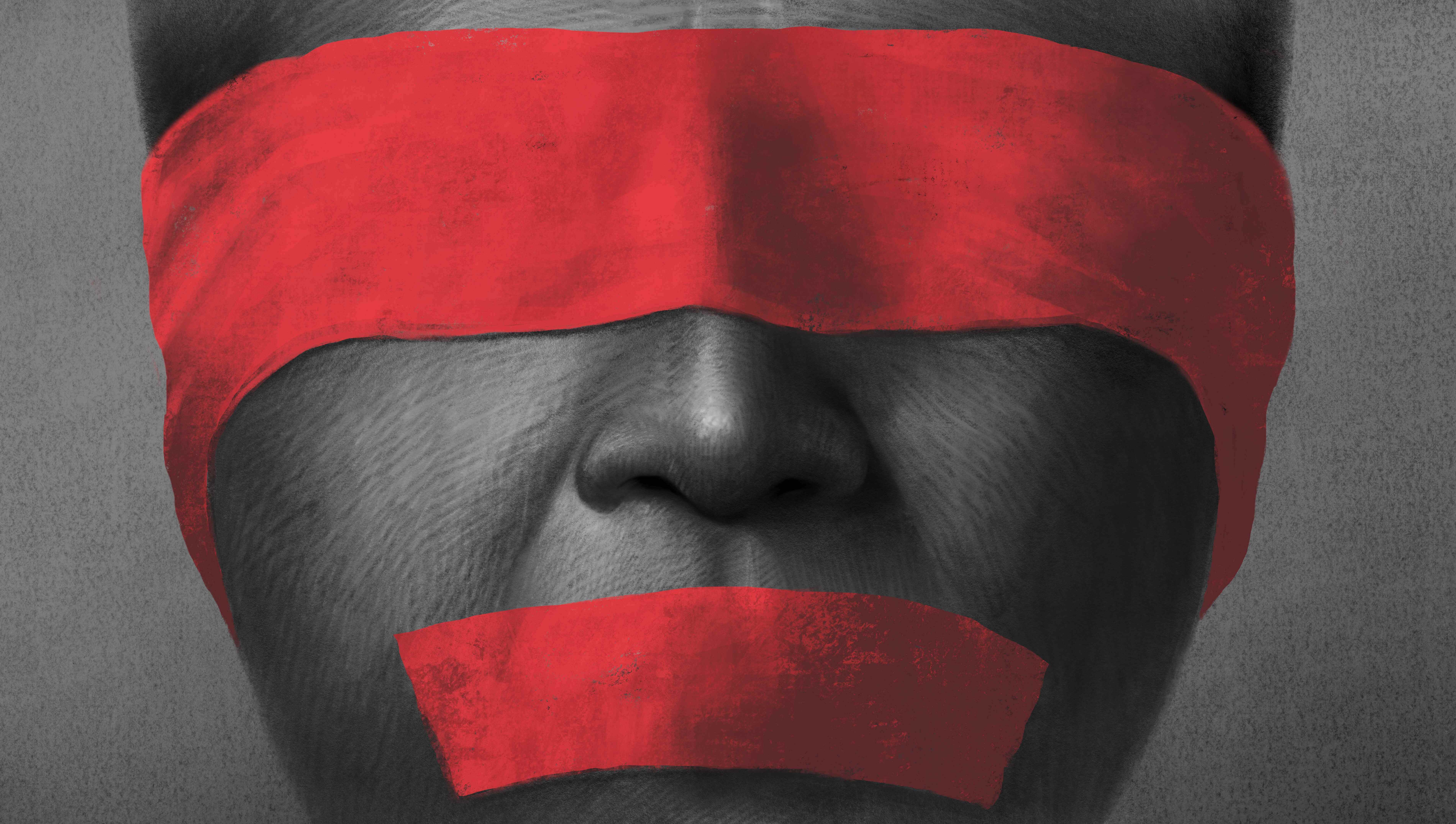
The top federal prosecutor in Manhattan is facing his first major test: how to handle a baldly political directive to investigate President Donald Trump’s foes in a case that has dogged his administration for months.
Manhattan U.S. Attorney Jay Clayton will investigate the late convicted sex offender Jeffrey Epstein's relationship to prominent Democrats after Attorney General Pam Bondi ordered the probe at Trump’s direction.
Inside the Manhattan U.S. attorney’s office, which has long prized its independence and kept itself at arm's reach from Justice Department headquarters, the order was met with a mix of bewilderment and trepidation, according to three people familiar with the matter who were granted anonymity to share internal conversations.
And Clayton, who had never worked as a prosecutor before taking the job in April, will face several dilemmas in handling the high-profile and politically sensitive case. Those include whether he’ll recuse himself, since he previously represented one of the targets of the probe, and how he’ll handle material if it incriminates Republicans. Also at issue is whom he will assign to the task, since the Trump administration in July abruptly fired Maurene Comey, one of the lead prosecutors on the cases against Epstein and his convicted accomplice Ghislaine Maxwell.
Adding to the intrigue is the pending release of the Justice Department’s full Epstein files, a cache of tens of thousands of documents that could reveal potentially embarrassing information about the very people Clayton is investigating, along with others. Under the legislation Trump signed into law ordering DOJ’s release of the materials, however, the department may withhold any documents that “would jeopardize an active federal investigation or ongoing prosecution, provided that such withholding is narrowly tailored and temporary.”
Such a move to shield potentially damaging information on Democrats would run counter to Trump’s long-running efforts to deflect from his and other Republicans’ links to the disgraced financier.
A spokesperson for the office declined to comment.
Legal experts nevertheless expressed concern about whether the Trump administration launched the Clayton-led probe as a pretext to claim it can withhold large portions of the cache Congress has ordered it to release.
Clayton has yet to assign prosecutors to work on the investigation, according to two people familiar with the matter who were granted anonymity to discuss internal operations.
Trump’s directive comes at a crucial time for Clayton, as the prosecutors who work for him are on edge about his ability to insulate the office from political interference.
“The question is how faithfully he plans to interpret his marching orders,” said Rebecca Roiphe, a former prosecutor who teaches criminal law and ethics at New York Law School.
“I think he's in an unenviable position, because I do think he probably is trying to keep this investigation as close to what is considered appropriate and traditional within the office, and [facing] pressure from the outside to do something that is entirely inconsistent with those traditions,” she said.
There are also questions about whether Clayton will recuse himself, since he represented at least one of Trump’s intended targets of the investigation: Reid Hoffman, the LinkedIn co-founder. Trump also directed Bondi to investigate former President Bill Clinton and former Harvard President Larry Summers, who has worked in the Obama and Clinton administrations.
Authorities haven’t accused Hoffman, Clinton or Summers of wrongdoing in connection with Epstein. A spokesperson for Clinton has said he cut off ties with Epstein prior to Epstein’s 2019 arrest and was unaware of Epstein’s alleged crimes. Hoffman has said his connection to Epstein was limited to fundraising and said calls for investigation were “political persecution and slander.” Summers has said he is “deeply ashamed” of his communications with Epstein.
It’s also unclear what might happen if the evidence points to wrongdoing by Republicans — or by Trump himself. Will prosecutors be asked to set it aside, thereby violating one of the most basic tenets of the office, to follow the facts wherever they lead?
And whom will Clayton assign to the task?
That last question is a particularly touchy subject because prosecutors and alumni of the office are still reeling from Clayton’s handling of the firing of Comey, who was terminated in July without explanation.
Though by many accounts the decision to fire Comey, who had worked at the office for nearly 10 years, wasn’t Clayton’s, many in the office’s orbit balked at what they believed was his lack of adequate support or encouragement for her as well as his failure to address the matter publicly.
And last month, he raised eyebrows around the office by giving an interview to CNBC in which he criticized members of the bar for failing to protest the criminal cases against Trump.
"We have very prestigious lawyers … and they stayed silent during the prosecutions of Donald Trump,” Clayton said. “You did not hear from them." He added: "I don't think the leaders at the bar have scrutinized the Justice Department enough under the prior administration."
Mimi Rocah, a former federal prosecutor who has criticized Clayton’s handling of the Comey firing, wrote earlier this week that prosecutors in the Southern District of New York, as the office is formally known, won’t be used as “political pawns” and that the Epstein assignment is “a crucial test” for Clayton.
“We have to kind of leave the door open a little bit for him to do the right thing,” she said in an interview.
“I don't know what the right thing is yet, but I know what is the wrong thing,” she added. “The thing that was referred to SDNY by the attorney general is a limited look at certain people and not other people based on their political party. And that's just obviously wrong.”
Despite Clayton’s quandary, some former federal prosecutors said there is an opportunity for Clayton to conduct a genuine assessment of material that his office didn’t have during its original Epstein probe.
“I think there are legitimate reasons to do some further investigation,” said Arlo Devlin-Brown, the former chief of the public corruption unit at the Manhattan U.S. attorney’s office. “And if you're trying to give the public confidence that every avenue investigation is being pursued, why would you not have the prosecutor's office that looked at this before look through those things and see if they're leads? And I think they will do that.”
Others, however, have questioned whether the inquiry is merely a pretext for the Justice Department to claim it can’t disclose materials from the Epstein investigative files. The department is under a fast-approaching deadline to publicly share thousands of documents after Trump signed a bill this week ordering DOJ to release its materials related to Epstein.
On his podcast earlier this week, Preet Bharara, the former Manhattan U.S. attorney and longtime Trump critic, said it would be “reasonable” to expect the department to make such an argument if it were operating “in good faith.”
But, he added, “the Justice Department keeps saying, in various matters, ‘Hey, this is what we do. We don’t release this. And this is how we conduct things…’ All of that is right and true if they were credible about the reasons why they were doing things.”
On Wednesday, Bondi was circumspect about how the New York probe might impact the disclosure of the Epstein files. “We're not going to say anything else on that,” she said, “because now it is a pending investigation in the Southern District of New York.”
Popular Products
-
 Classic Oversized Teddy Bear
$23.78 -
 Gem's Ballet Natural Garnet Gemstone ...
$171.56$85.78 -
 Butt Lifting Body Shaper Shorts
$95.56$47.78 -
 Slimming Waist Trainer & Thigh Trimmer
$67.56$33.78 -
 Realistic Fake Poop Prank Toys
$99.56$49.78