Lit Hub Weekly: October 19 – 23, 2026
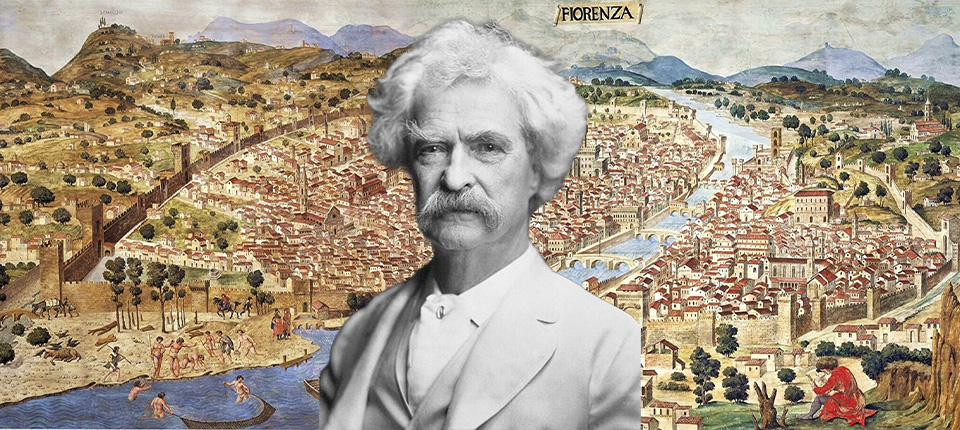
TODAY: In 1903, Mark Twain moves to Florence, Italy. Meet the authors shortlisted for the 2026 Center for Fiction First Novel Prize. | Lit Hub In Conversation Was Cormac McCarthy that guy in your MFA? | Lit Hub Craft We promise: you really don’t need a smartphone. | Lit Hub Technology On Irish legend’s dangerously seductive fairies, the beguiling aes sidhe. | Lit Hub History “Plath described and wrote herself into the violence of her own century. She is now part of the record of the violence of our own.” Kristin Grogan considers new collections of Sylvia Plath’s writing. | Boston Review What really makes a bad literary adaptation bad? | The Walrus Sarah Stankorb considers the tradwives who are deconstructing: “They are a sign that gender-based authoritarianism is unsustainable, even among the biggest advocates for women’s submission.” | Slate Sarah Clegg digs into the surprisingly deep roots of romantasy. | The Guardian Arundhati Roy explores AI as capitalism’s final form: “The oligarchs do seem to believe in their extinction narrative – at least enough to have built themselves bunkers at the far ends of the Earth stocked with water, food and ammunition. But extinction is not what they are selling the rest of us.” | Equator How journalists—including those at Wired—were fooled by Elizabeth Holmes. | Wired Hannah Goldfield digs into Louise Glück’s passion for restaurants. | The New Yorker One of the spookiest (and most famous) writing competitions in history gave us both Frankenstein and The Vampyre. | JSTOR Daily “She was reaching women I would never know. This, I thought, was how social change really occurred.” Vivian Gornick remembers Gloria Steinem. | The Baffler “You pay attention to his attention.” A.O. Scott on John Berger’s antidote to the infinite scroll. | The New York Times Magazine “But how do you change minds? Tsai, Chang, and Chiang all responded the way one would expect bookstore owners to: the transformative power of reading.” Kelly Kong reports on Taiwan’s “bookstore revolution.” | The Nation Willis Jenkins remembers Wendell Berry, “the farmer-prophet of rural Kentucky.” | The Hedgehog Review Izabella Scott traces the literary history of dildos. | The Paris Review “In several descriptions of these amateur events, including some of his own, Hemingway sounds less like a matador than a rodeo clown.” On Hemingway’s beef with bullfighting author Barnaby Conrad. | The New Yorker What happened to Scientific American? Emmet Fraizer investigates the uncertain future (and messy recent past) of the beloved science publication. | The Nation Also on Lit Hub:

More Insurance stories