Bigger Is Better: How 12 Oaks, Lcs, Onelife Meet Demand For Larger Senior Living Units
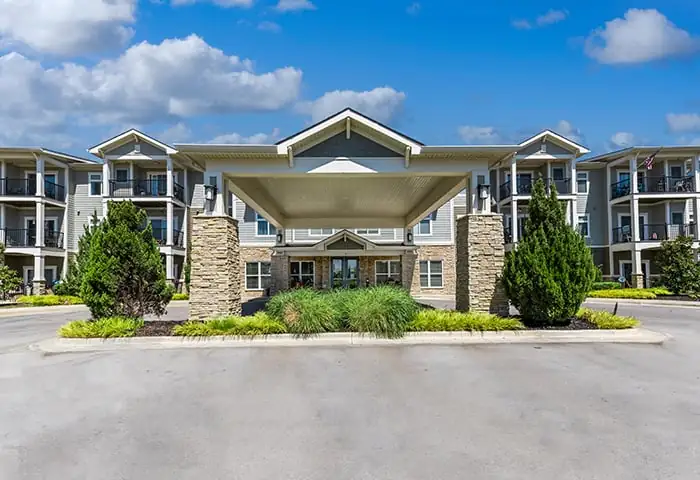
Data shows that the baby boomers believe bigger is better when it comes to senior living units. Senior living operators are catering to those preferences in a variety of ways.
Recent occupancy data from the National Investment Center for Seniors Housing and Care (NIC) showed that some senior living residents prefer larger units than they once did.
12 Oaks Senior Living President Greg Puklicz has seen this trend firsthand within the company’s 36 communities. While the previous Silent Generation was content with smaller rooms and shared spaces, the baby boomers are moving out of their homes and wanting all of the space they can get, he told Senior Housing News.
Denver, Colorado-based Onelife Senior Living’s one-bedroom units remain the most popular option for residents, but demand is rising for two-bedroom units. Residents are wanting more space for their hobbies, activities and to house their possessions.
“They can afford to pay more premium to get what they want,” Dan Williams, Onelife CEO, told Senior Housing News. “And the older generation that’s in our buildings, they’re phasing out.”
Senior living operators are in some cases combining units to make spaces larger and meet preferences. When operators can’t adjust the space of the units, they are upgrading them by replacing outdated countertops with solid surface granite or quartz that better speaks to the quality of the apartment, according to Dustin Sayre, director of renovations and Presbyterian Homes & Services.
“Instead of focusing on what we can’t control, such as making the apartment builder bigger, we focus on what we can control to help sell or move the apartment,” Sayre said.
The drive for bigger and better
Senior living residents across the acuity spectrum desire larger units, including in assisted living and memory care settings, the NIC data shows.
Residents of Des Moines, Iowa-based LCS have desired larger units in the last 10 to 15 years and the company has adjusted its offerings in its 130-community portfolio to meet those desires. The company’s one- and two-bedroom apartments typically differ by about 400 to 500 square feet, according to Tom Mathisen, senior vice president of LCS Development.
“It’s very rare to see any studio AL units in our portfolio, and the layouts that seem to resonate with potential residents lead to larger sizes overall,” Dan Novelli, director of LCS Development, told SHN. “AL residents and families don’t necessarily want to feel like they are sacrificing square footage.”
Dallas-based 12 Oaks sometimes combines two studios to make one larger unit, a task that doesn’t require much more work than a typical unit turnaround that includes renovations, Puklicz said. 12 Oaks often refurbishes units and then puts them back on the market with higher rent, reflecting the improvements in quality and increase in size.
HVAC systems are often on the list of renovations during turnarounds, and doing so can another $250,000 to the renovation cost. To overcome this, LCS builds out its design team with subject matter experts early in the renovation process.
“We spend a great deal of time working with community leadership and the design team to determine not only what prospective residents may want, but also what is feasible given the constraints of their current space,” Novelli said. “Nothing negatively impacts a pro-forma more than unforeseen issues. If we can identify them early, we can plan for worst case scenarios.”
Strategies for renovations
Operators implement a variety of strategies to complete renovations and increase the general size of studio units.
Presbyterian Homes & Services has “experimented on everything,” Sayre said.In some instances, the operator holds vacants to temporarily house residents while their units are being worked on. The operator is mindful of the cost of relocating residents as it does so.
The operator focuses on in-unit renovations while the residents remain there, and complete painting and floor replacements after a move-out. To get ahead of resident pushback, Sayre said community teams meet with them ahead of time, both in group and private settings, to lay out what is being done and the expected timeframe to completion. Sayre added they also partner with contractors that specialize in senior living settings to minimize the disturbance by blocking out hours instead of days.
Onelife takes a block approach to turning around struggling communities. At one community it had in Kirkland, Washington, the building was only 60% occupied, and the operator would block off 12 units at a time to complete the renovations, and common areas were refurbished at the same time.
The new units can then be sold at a higher rate as a remodeled unit, Williams said.
When the less popular unit counts are converted into one-bedroom units, the average unit count in a community tends to go down to reflect it. However, while the population may see a slight decrease, the process is worth it, Puklicz said, and often provides a variety of benefits.
While 12 Oaks hasn’t had a dramatic decrease in unit counts, even a 10% difference can see notable improvements in revenue per available room (RevPAR), operations and filling the building’s occupancy with higher rent rates due to the improvements.
“You’re reducing your occupant load and the load on dining and load on care staff and other areas as well,” he said. “It’s more efficient.”
The post Bigger is Better: How 12 Oaks, LCS, Onelife Meet Demand for Larger Senior Living Units appeared first on Senior Housing News.
Popular Products
-
 Smart Bluetooth Aroma Diffuser
$585.56$292.87 -
 WiFi Smart Video Doorbell Camera with...
$61.56$30.78 -
 Wireless Waterproof Smart Doorbell wi...
$20.99$13.78 -
 Wireless Remote Button Pusher for Hom...
$65.99$45.78 -
 Digital Coffee Cup Warmer with Temp D...
$88.99$61.78