After A Decade Of Wildfires, An Overlooked Election Could Shape California’s Climate Future
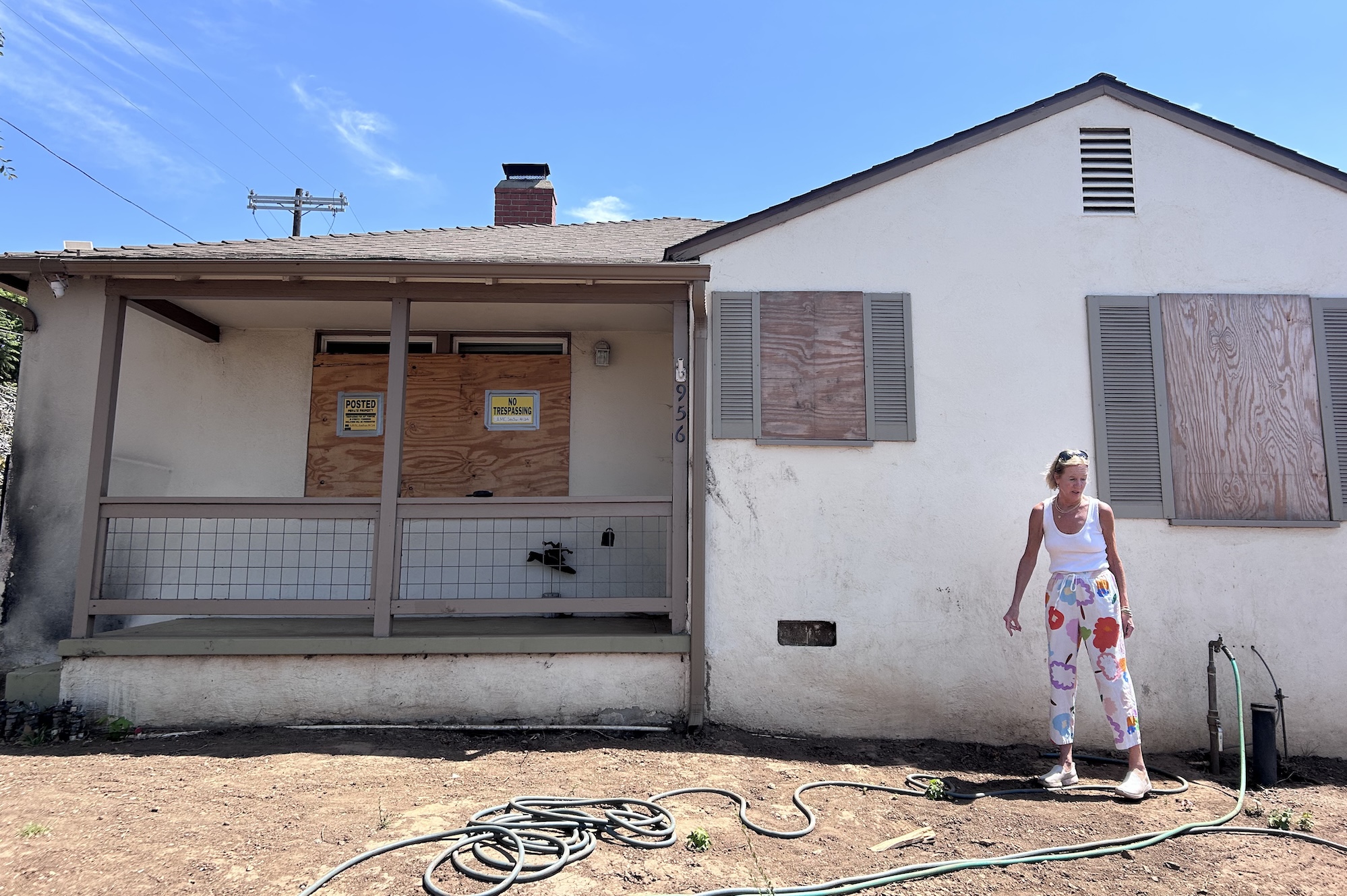
Insurance is a social contract. When you sign up with State Farm or Allstate for home insurance, you confirm your membership in a community — your money will go to fix someone else’s burned or flooded home, and their money will in turn support yours. We let insurance companies sell policies on a private market, and we elect or appoint government officials to oversee that market to protect the interests of homeowners.
That’s how it’s supposed to work, but that’s not how it panned out for Lynn McIntyre.
When McIntyre’s mother died in 2022, she willed McIntyre her longtime house in the “Alphabets,” a charming neighborhood not far from the coast in western Los Angeles. McIntyre and her daughter had only lived there for a year when her insurance company, Liberty Mutual, withdrew her fire coverage. She couldn’t find another private company to cover the home’s fire risk, so she enrolled in the California FAIR Plan, a state-backed “insurer of last resort,” paying another $5,000 a year in addition to her regular home insurance from Liberty.
More Housing stories