What To Know About Covid, Flu, Rsv Vaccines Amid Respiratory Virus Season
Respiratory virus season is upon the United States as the cold weather months set in, meaning cases of COVID-19, influenza and RSV are set to increase.
In its annual outlook report, the Centers for Disease Control and Prevention (CDC) said it expects the 2025-26 respiratory virus season to have a similar number of peak hospitalizations from influenza, RSV and COVID-19 compared to last season.
Public health experts told ABC News the best way for people to protect themselves against these viruses is to get vaccinated.
"We are so fortunate to be in a time that we have these protective measures, especially for our children," Dr. Hansa Bhargava, a board-certified pediatrician at Children's Health Care of Atlanta and adjunct Professor at Emery University, told ABC News.
"It's really important to get the vaccines that your doctor recommends, both for yourself and also because even if you get vaccinated and there isn't herd immunity, which means the community is not protected, then [your family is] at greater risk to get the illness if it comes through," she continued.
Here's what to know about the three vaccines available his season.
COVID-19 vaccines
Earlier this month, the CDC signed off on recommendations made by its vaccine advisory committee, dropping the universal COVID-19 vaccine guidance.
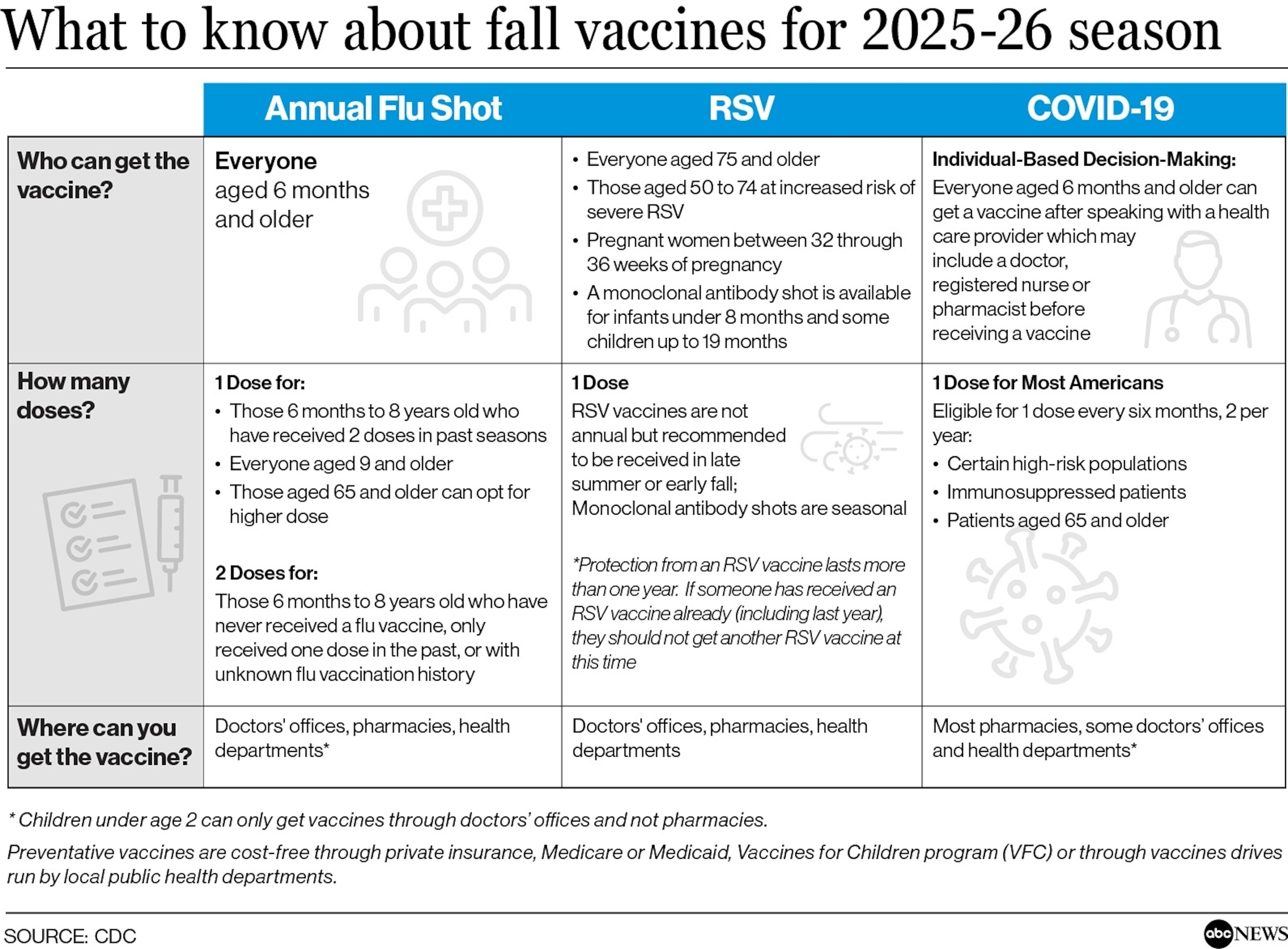
Previously, the CDC recommended anyone aged 6 months and older receive a COVID-19 vaccine. Currently, the CDC recommends Americans can get the vaccine "based on individual-based decision-making," or personal choice.
This means everyone aged 6 months and older can get a vaccine after patients or parents speak with a health care provider, which may include a doctor, registered nurse or pharmacist, before receiving a vaccine.
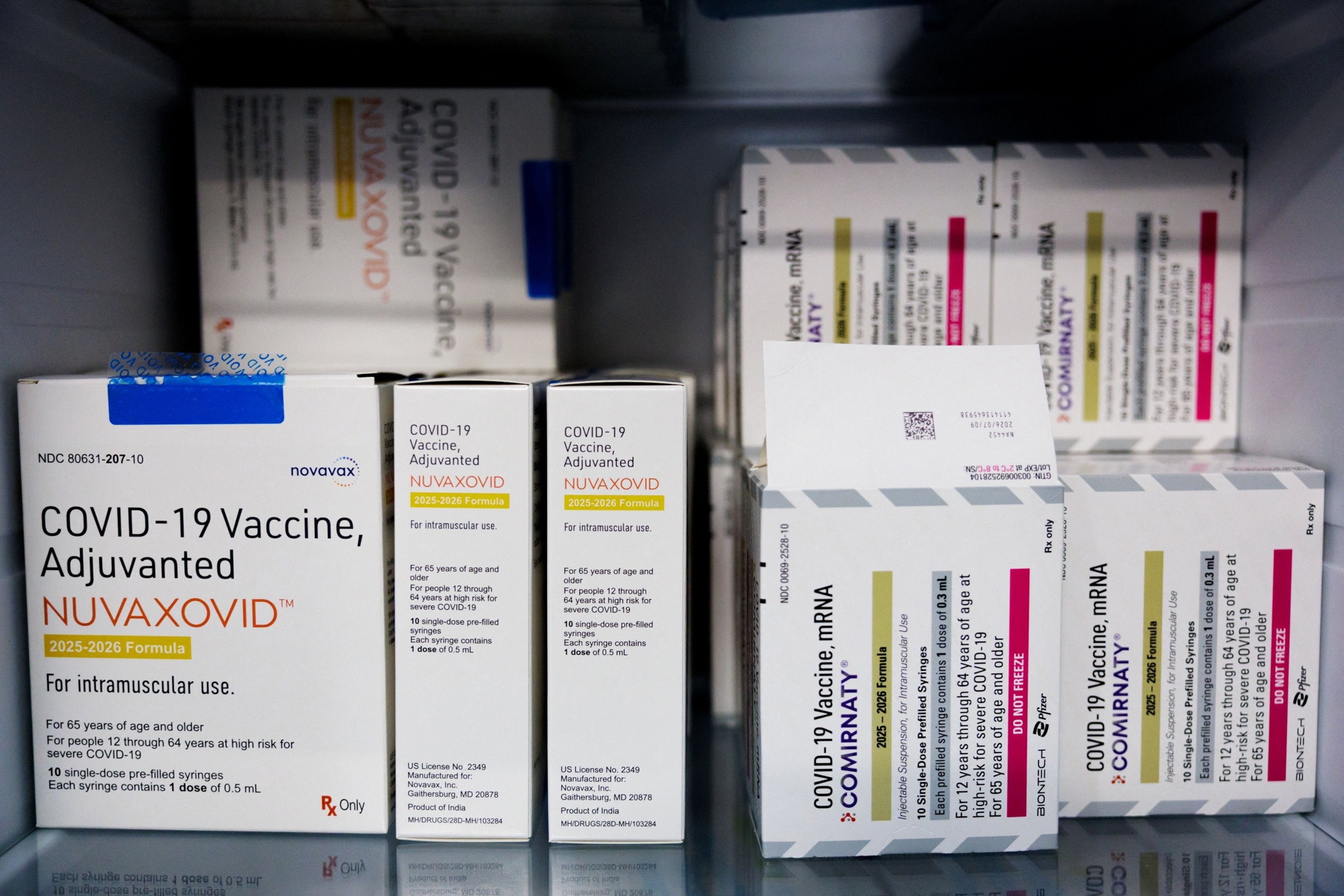
The CDC's official recommendation came after the U.S. Food and Drug Administration (FDA) narrowed marketing authorization for updated COVID-19 vaccines for those aged 65 and older and for younger Americans who have at least one underlying condition that puts them at high risk for severe COVID-19.
Most Americans who choose to get vaccinated will only need one dose. However, some groups may be eligible for one dose every six months or two per year, including certain high-risk populations, immunosuppressed patients and patients aged 65 and older.
However, the American Academy of Pediatrics recommended earlier this year that children ages 6 months to 23 months receive a COVID-19 vaccine due to their high risk of severe illness.
Additionally, the American College of Obstetricians and Gynecologists recommended all women pregnant, planning to become pregnant or nursing receive a COVID-19 vaccine after Health Secretary Robert F. Kennedy Jr. said he was cutting COVID-19 vaccine recommendations "for healthy children and pregnant women."
"The administration has done a tremendous amount of work creating confusion and chaos over the past year," Neal Smoller, a pharmacist who owns Village Apothecary in Woodstock, New York, told ABC News. "And what was steadfast and overwhelmingly strong recommendations from our medical consensus bodies. Now we have disparate recommendations, and so it has confused a lot of people of what is and is not available for them."
Public health experts told ABC News that COVID-19 is likely to be circulating at high levels during the fall and winter season, and Americans should consider getting vaccinated to protect themselves.
"COVID has not gone away," Dr. William Schaffner, a professor of preventative medicine at Vanderbilt University Medical Center, told ABC News. "It still causes a substantial amount of illness and we are seeing, locally and around the country, hospitalizations due to COVID itself, and the people who are being hospitalized continue to be people at high risk ... who are not up to date with their vaccines. So, you can certainly mitigate, reduce your risk of hospitalization by getting vaccinated."
COVID-19 vaccines are available at most pharmacies and some doctors' offices and health departments, with most insurance plans expected to cover the cost of the shot for the upcoming season.
Influenza vaccines
The CDC currently recommends that everyone aged 6 months and older receive an annual flu vaccine.
There are several flu vaccines available this season, with recommendations varying by age and medical history.


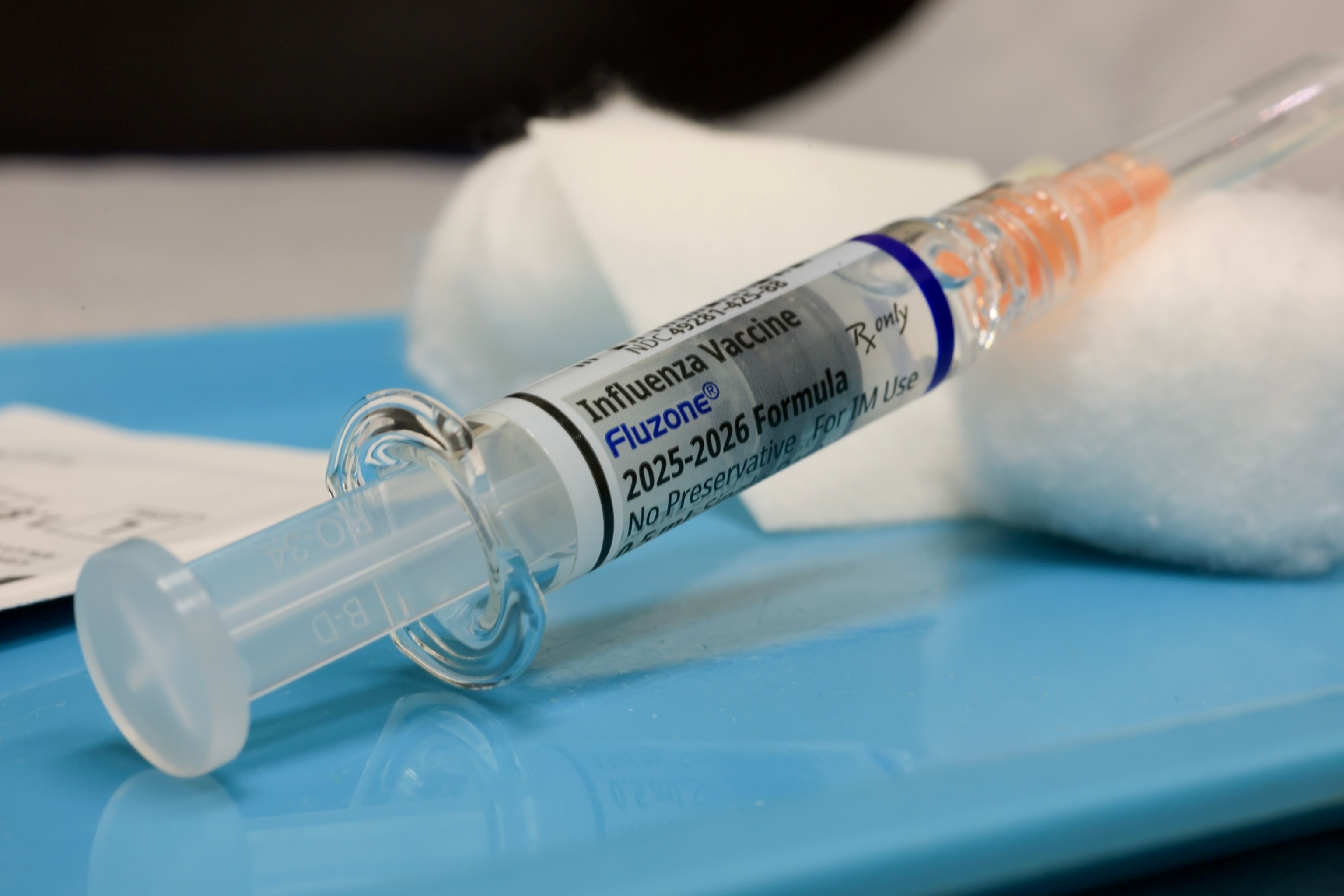
Standard-dose inactivated flu vaccines are available for anybody as young as 6 months old. For those between ages 2 and 49, who don't have certain medical conditions and aren't pregnant, a nasal spray flu vaccine is also available.
Adults aged 18 and older can receive a recombinant flu vaccine, which is produced without eggs, for people 18 years and older, and Americans aged 65 and older can opt for a higher dose due to their risk of severe illness.
One dose is recommended for children between 6 months and 8 years old who have received two doses in past seasons and everyone aged 9 and older.
Two doses are recommended for those between ages 6 months and 8 years who have never received a flu vaccine, only received one dose in the past or with unknown flu vaccine history.
Schaffner said getting the flu vaccine can protect against severe disease, hospitalization and death.
"It's incredibly safe. It's given in the millions upon millions of doses around the world each year," Schaffner said. "The major adverse events are sore arm, and there are some people who get a day or two of sore arm, may even have a degree of fever and feel a little puny for 24 to 48 hours."
Flu shots are available at doctors' offices, pharmacies and health departments, and are covered by most insurance plans.
RSV vaccines
RSV vaccines are recommended for all Americans aged 75 and older and those aged 50 to 74 at increased risk of severe RSV, according to the CDC.
Risk factors for severe disease include chronic heart or lung disease, a weakened immune system and living in a nursing home, the federal health agency said.
Three RSV vaccines are currently licensed by the FDA for use in adults.
Additionally, pregnant women are recommended to receive a maternal RSV during 32 through 36 weeks of pregnancy to protect against RSV and pass on antibodies to their baby, which can protect for up to six months after birth.
For babies whose mother did not receive a maternal RSV vaccine, a monoclonal antibody shot is available for infants under 8 months old and for some children up to 19 months old.
"It's very important for babies to be protected against RSV and, therefore, is recommended that pregnant women ... from 32 to 36 weeks get the vaccine," Bhargava said.
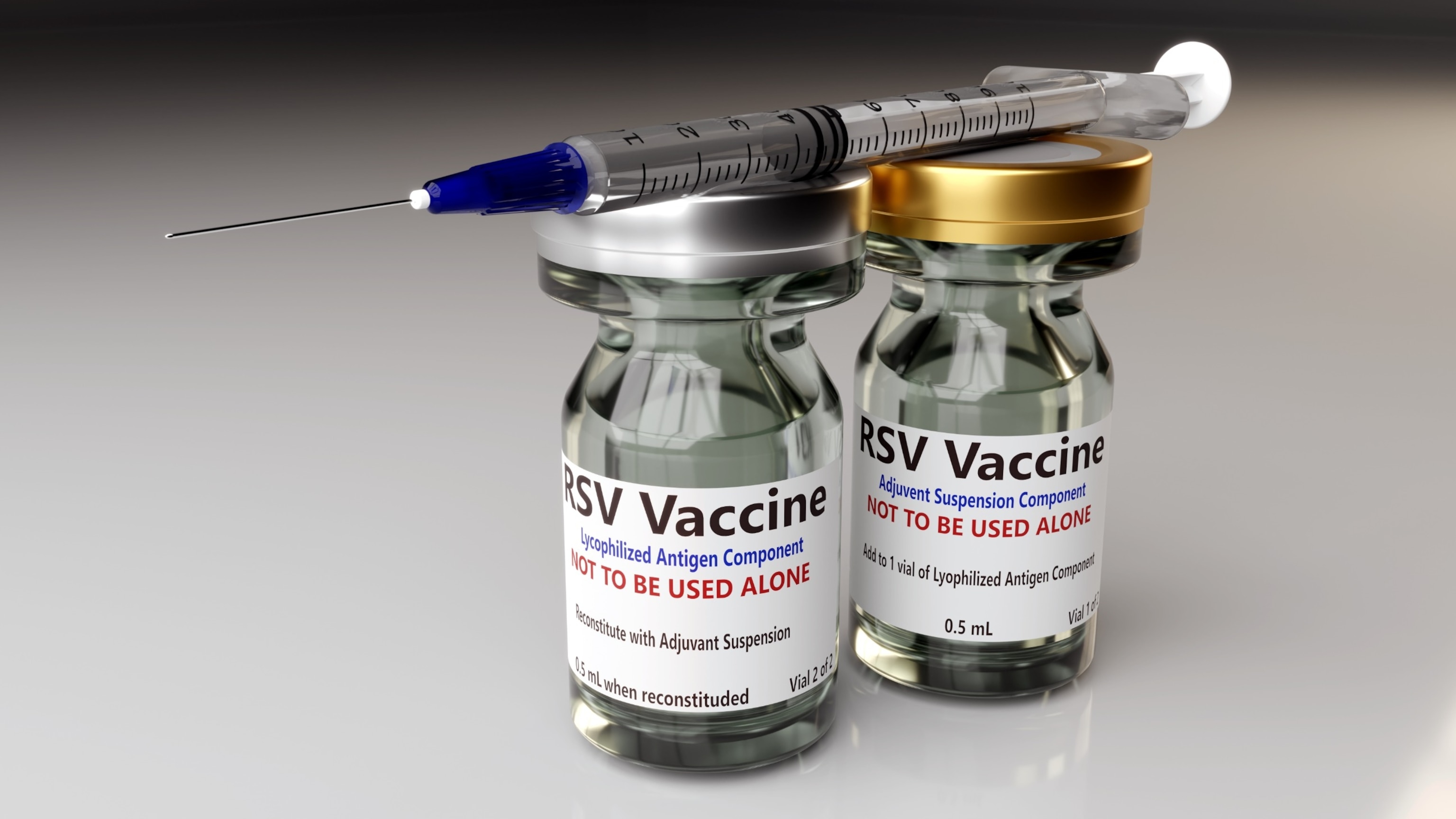
RSV vaccines are not annual shots like flu or COVID but are recommended to be received in late summer or early fall. Monoclonal antibody shots, however, are available seasonally.
Protection from an RSV vaccine lasts more than one year, according to the CDC.
"If you're like me, and you have received [an] RSV [vaccine] last year, you do not need another one now," Schaffner said.
RSV vaccines are available at doctors' offices, pharmacies and health departments, and are covered by most insurance plans.
ABC News' Dr. Ogechi Nwodim contributed to this report.
Ogechi Nwodim, MD, MSc, is a resident physician in Emergency Medicine and a member of the ABC News Medical Unit.
Popular Products
-
 Ashwagandha & Black Cumin Seed Oil
$43.56$21.78 -
 Shilajit Capsules for Strength & Vita...
$43.99$29.78 -
 Pre-Workout Supplement for Strength, ...
$43.99$29.78 -
 Centrum Multivitamin for Energy, Immu...
$43.99$25.78 -
 Bee Venom Capsules for Joint Support ...
$43.56$21.78