Top 6+ Easy Exercise Books For Seniors (2025)

Staying active in your sixties, seventies and beyond is not about chasing six-packs. It is about getting out of a chair without wobbling, walking the dog without needing a long recovery, and feeling steady on the stairs. The World Health Organization recommends that older adults aim for at least 150 minutes of moderate activity each week, along with regular strength work, because it cuts the risk of falls, heart disease, depression and loss of independence. Yet a huge share of people over 65 do not reach even the lower end of that range.
The good news is that you do not have to join a gym or learn complicated workouts. Gentle strength training, chair exercises, stretching can all improve balance and confidence. Done regularly, even in small chunks, these movements help protect joints, support bones, and keep the brain sharper. For many seniors, the real barrier is not willpower but confusion. They are unsure what is safe with arthritis, replaced joints or long-standing back pain, and they often feel lost in generic fitness advice that was written with younger bodies in mind.
Staying active after 60 is one of the clearest “cheats” we have for healthy longevity. Large long-term studies show that older adults who meet basic activity guidelines – roughly 150 minutes of moderate movement per week plus some strength work – have a lower risk of early death from any cause, including heart disease, stroke and certain cancers. Even people who only start being active in their 60s or 70s still gain meaningful benefits compared with those who remain sedentary. Regular exercise helps keep weight, blood pressure and blood sugar in check, supports stronger bones and muscles, and maintains the ability to walk at a good pace – a surprisingly strong predictor of survival in older age. Taken together, this means that gentle but consistent movement does not only make day-to-day life easier, it is also strongly linked with living longer and staying independent for more of those extra years.
That is where clear, age-focused exercise books come in. The eight books below are all published recently and they are written specifically for seniors who want simple, realistic routines they can follow at home. They can support you or an older loved one in building a routine that feels doable rather than intimidating.
What Are The Top Exercise Books For Seniors?
15 Minute Core Exercises for Seniors, by Stanley Octavius (2025)
This book presents a clear, structured approach to staying active later in life, with a specific focus on core strength, balance, and posture for seniors. The routines are short (typically 15 minutes) and are designed to be low-impact and joint-friendly, which makes them accessible for people who are new to exercise or returning after a break. The step-by-step instructions and illustrations aim to make each movement easy to follow and safe to perform.
Beyond floor-based exercises, the book also includes chair yoga and chair-based workouts, along with suggestions for how to modify or progress movements as confidence and strength improve. There’s a noticeable emphasis on practical benefits, like improving stability, reducing fall risk, and supporting everyday activities such as walking, gardening, or playing with grandchildren.
I think this book will be especially useful for seniors who feel intimidated by traditional fitness guides and want something straightforward and gentle. It doesn’t try to be flashy or extreme, and that’s its strength. If you’re already quite active, you might find the routines a bit basic, but for cautious beginners or those focused on maintaining independence, it seems like a thoughtful and realistic starting point.

Tai Chi for Seniors over 60, by Liu Shenhao (2025)
This book brings the slow, flowing movements of tai chi to an older audience in a very accessible way. It begins by explaining the principles of tai chi in plain language. There is discussion of balance, controlled breathing and mindful focus, but always tied to concrete benefits like fewer stumbles, better posture and calmer nerves. For seniors who have seen tai chi in parks or on video and felt curious but intimidated, this text works as a gentle introduction.
The core chapters break down key tai chi sequences into small building blocks. Each posture is described in terms of where your weight goes, how high to lift your arms, and how to coordinate breathing with movement. The book suggests short daily practices that can last ten to twenty minutes, with variations for people who need a chair or wall support. There are notes on how tai chi can help with joint stiffness and overall coordination, which is especially important for fall prevention in older age.
What makes this book unique in this list is its focus on the more meditative side of movement. While you still get physical benefits, tai chi also trains attention and patience. That can be particularly valuable for seniors who are dealing with anxiety, sleep issues or feeling disconnected from their bodies. It is not a high-intensity plan, but it can quietly transform how someone moves through the day.

5-Minute Chair Yoga for Seniors, by Kierstie Payge Dolezal (2025)
This is one of the newest entries on the market, scheduled for late 2025, and it leans into an even smaller time commitment. The author, an experienced yoga teacher who has worked extensively with older adults, structures the whole book around five-minute chair-based practices. The introduction reassures readers that they do not need to be flexible, own special clothing or have any previous yoga experience. The only real requirement is a stable chair and a willingness to show up for a few minutes each day.
Inside the book you find more than forty five chair exercises and nine ready-made five-minute sequences. Each sequence targets a specific goal, such as easing morning stiffness, winding down before bed, or giving your back and hips a stretch after sitting. The exercises come with clear written instructions, large-print text and illustrations. There are also sections on breathwork, meditation and general tips for building a personal routine that fits around health issues and energy levels.
This title stands out because it strips the excuses down to almost nothing. Five minutes is short enough that most people feel they can manage it even on a bad day. The combination of very small time blocks, chair support and big, easy-to-read visuals makes this book realistic for seniors who are overwhelmed by longer programs. For readers who start with this and later want more, it can also work as a gateway into the longer chair yoga or strength training books above.

Low Impact Exercise for Seniors, by Desmond T. Hall (2024)
Desmond T. Hall’s book reads like a friendly coach walking beside you. It starts by explaining how aging changes muscles, joints and balance, then moves straight into very simple sessions you can do in a small space. Every exercise is described step by step, with clear cues about breathing, posture and where you should feel the work. It covers everyday movements like sitting and standing, reaching, stepping and gentle rotational work for the spine.
Beyond the individual exercises, the book lays out short, structured routines that combine strength, balance and flexibility. Each routine is designed to be adjustable, so you can repeat fewer sets on a low-energy day or add a little more when you feel stronger. There is a consistent focus on safety, with frequent reminders to listen to your body, use support when needed and progress slowly. The plan works well for people with joint pain or limited stamina because everything is low impact and joint friendly.
This one is special because it takes a genuinely holistic view. Hall writes about mental resilience and mood right alongside physical strength, and encourages readers to see movement as a way to reclaim joy and independence in older age rather than as a chore. For someone who is wary of exercise or has had bad experiences with gyms, this softer but still structured approach can be a much easier entry point.

Chair Yoga for Seniors, by JC Harrison (2024)
This is a focused, time-bound program rather than a big reference manual. JC Harrison lays out a ten-day chair yoga challenge built around ten-minute sessions, designed to fit into even a very busy or low-energy day. Each day has a clear theme, such as reducing back stiffness, easing hip tension or improving circulation, and the instructions are broken down into small, gentle movements that rely on the support of the chair.
Alongside the book routines, Harrison includes links to matching video workouts, so readers who prefer to follow along visually can do so. The sequence is carefully graded. Early days are very simple and mostly about getting comfortable with moving again. Later sessions introduce slightly more demanding flows, with attention to breathing and posture, but still stay well within a safe range for older bodies. There is also attention to weight management, energy and basic strength building, which makes the challenge feel comprehensive rather than purely stretching based.
This book stands out because of its strong sense of structure and its tight time frame. Many seniors feel overwhelmed by open-ended programs. A clear ten-day path with short daily commitments is much easier to commit to and finish.
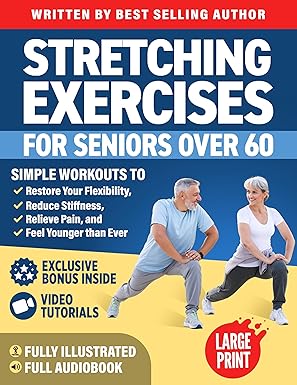
Stretching Exercises for Seniors over 60, by Michael Smith (2023)
This guide is aimed at older adults who feel stiff, tight and worried about losing their range of motion. It focuses on stretching rather than strength training, and the routines are framed as short daily or near-daily practices that work around common mobility issues. The text explains how gentle stretching can help with joint comfort, posture and balance, and why it is especially important for people over sixty who spend more time sitting.
The book groups stretches by body region, such as neck and shoulders, lower back, hips and legs. Each section describes simple positions and movements that can be done while holding onto a chair, lying on a bed or standing near a wall. Many of the routines are described as quick guides for boosting overall mobility and vitality, and there is repeated emphasis on how better flexibility can reduce the risk of falls and injuries as you move through daily life.
Where some books try to do everything at once, this one is very clear that its goal is to help seniors become less stiff and more steady on their feet. That makes it a good companion to a strength-focused book.

10-Minute Strength Training for Seniors, by Kristen Carter (2021)
This book is built around a very simple promise. Give it ten minutes and it will show you how to get stronger and more mobile using short, focused routines. Ed Deboo is a physical therapist with decades of experience, and he writes in a way that speaks directly to older adults who may be worried about fragile joints, low bone density or previous injuries. The tone is reassuring without being patronising, and the explanations of form and posture are clear enough that you can follow them on your own.
The content is organised into three parts. First you get an overview of why strength training matters for seniors, and how to warm up and progress safely. Then you move into about forty individual exercises aimed at all the major muscle groups, and finally into twenty-plus pre-built routines that string those moves together into quick ten-minute sessions. Many exercises use body weight or household objects like soup cans, and there are ideas for doing everything in a living room, no machines required.
What makes this book stand out is how practical it is for complete beginners. Deboo constantly gives options to make movements easier or harder, so a reader who has not exercised in years can start at a gentle level, while a more active senior still feels challenged.
Some Interesting Facts About Why Exercise Is Essential for Seniors
Muscles shrink faster after 60 – but they’re still trainable
From around mid-life, we all start losing muscle. By older age this speeds up: aging and a sedentary lifestyle together lead to clear declines in muscle mass, strength and power, a condition called sarcopenia.
The drop is not only about size. Fast-twitch fibers, which help you react quickly to a trip or stumble, are hit hardest. That is one reason why simple tasks like climbing stairs or getting out of a chair feel harder in your 60s and 70s.
The hopeful part: studies show older adults, even those with sarcopenia, still gain strength and function when they do resistance training (weights, bands, bodyweight) a few times per week. Exercise can slow or partly reverse age-related muscle loss and improve walking speed, chair-stand time and overall mobility.
Bones quietly thin out – strength work helps keep them solid
After 50, and especially after menopause in women, bone mineral density drops, which raises the risk of osteoporosis and fractures from relatively small falls.
In one 18-month trial in older women, a structured exercise program that mixed resistance training and impact movements led to significant improvements in bone density and lower fall risk, compared with a wellness-only group.
Public health reviews also show that older adults with low strength and poor balance are more likely to have first and repeat falls, and that supervised strength + balance exercise at least twice a week is one of the most effective non-drug ways to protect bones and prevent fall-related injury.
Balance and gait change – targeted exercise cuts fall risk
Even in healthy people, gait becomes less stable with age. Studies show that dynamic balance (how stable you are while moving) starts to worsen from around 40–50 and is clearly worse by older age, which helps explain why falls during walking are a major issue for seniors.
Research links age-related muscle loss and power loss directly to falls: weaker legs and slower reaction times mean you are less able to “catch” yourself when you trip.
Resistance training combined with balance work (for example, chair exercises, tai chi, or standing on one leg while holding support) improves neuromuscular function and has been shown to reduce fall risk in older adults, including those who already have sarcopenia.
Heart, blood sugar and lifespan all respond strongly to movement
Cardiorespiratory fitness tends to decline with age, especially if people become more sedentary. That decline is tied to a higher risk of heart disease, stroke, type 2 diabetes and loss of independence.
But moderate, regular physical activity in older adults is linked to lower cardiovascular morbidity and mortality, fewer new cases of diabetes, better blood pressure and better cholesterol profiles.
Large reviews conclude that older adults can still adapt physiologically to training: with consistent activity they improve aerobic capacity, strength and functional abilities like walking speed and ability to manage daily tasks. In short, even starting in your 60s or 70s, exercise can add healthy, independent years.
Brain and mood benefit – not only muscles and joints
Exercise is not just about joints and heart. Newer work on active aging shows that regular movement in older adults supports cognitive function, emotional resilience and social connection.
Physical activity improves blood flow to the brain and is associated with better performance on memory and thinking tasks in older age. Resistance and aerobic training have both been linked to reduced risk of cognitive decline and better overall mental wellbeing.
On the emotional side, active older adults report lower rates of depression and better quality of life. Group or guided exercise (including home-based programs with remote support) also helps fight loneliness, which is itself a health risk in later life.
Final Thoguths
Growing older changes the body, but it does not mean giving up on strength, balance or independence. The books in this list are simple tools that can help you or a loved one move a little more often and a little more confidently. Whether it is five minutes of chair yoga, a short strength session or a quiet tai chi flow, those small blocks of movement add up over weeks and months.
If you are starting later in life or coming back from a long break, it is normal to feel unsure. Begin with the easiest routines, listen to your body and talk with your doctor if you have medical concerns. Progress can be slow and uneven, yet every extra step, stand, stretch and reach is a real gain for your muscles, bones, heart and mind.
In the end, exercise after 60 is less about perfection and more about staying engaged with life. A good book can guide you, but you are the one who decides to show up today and move for a few minutes. Choose one title, try the first routine and give yourself credit for starting. Your future self will be very glad you did.
Also find some entertaining reads in our feel-good short story collection for seniors.
The post Top 6+ Easy Exercise Books For Seniors (2025) appeared first on Joelbooks.
Popular Products
-
 Ashwagandha & Black Cumin Seed Oil
$43.56$21.78 -
 Shilajit Capsules for Strength & Vita...
$43.99$29.78 -
 Pre-Workout Supplement for Strength, ...
$43.99$29.78 -
 Centrum Multivitamin for Energy, Immu...
$43.99$25.78 -
 Bee Venom Capsules for Joint Support ...
$43.56$21.78