This Hospital Worker Had 3 Attacks In 4 Days. ‘listening’ To His Body May Have Saved His Life
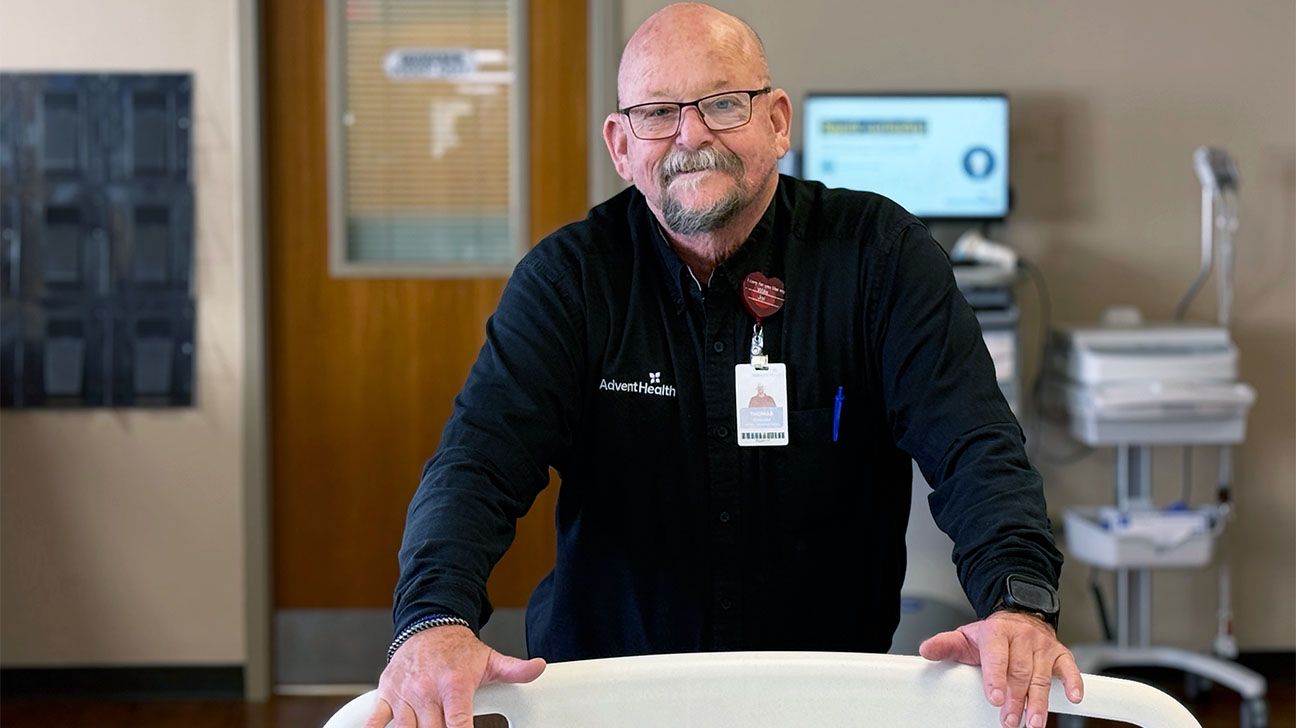
- 62-year-old Tommy Bell survived three heart attacks in the span of four days.
- Bell received care at the same hospital where he has worked for 10 years.
- He is sharing his story to help raise awareness about heart attack symptoms and prevention.
On November 26, 2025, 62-year-old Tommy Bell had just finished a shift at AdventHealth DeLand Hospital, where he had worked for over 10 years as the Patient Transport Supervisor.
On his drive home while talking with his wife, Joi, he felt pressure in the center of his chest that persisted on and off. The feeling pushed him to drive back to AdventHealth’s ER department.
After doctors performed tests and imaging, Bell was scheduled for a cardiac procedure two days later, on Friday, November 28. During recovery in the hospital, Bell had a heart attack and received a stent to normalize blood flow.
Once stabilized, he was moved to intensive care to recover and was discharged home two days later.
“Prior to that day, I had never experienced anything like that before. The only symptoms of a heart attack that I knew of were what I had seen on TV—chest pain, pain down the arm, etcetera,” Bell told Healthline.
While recovering at home, he still didn’t feel right, and his wife took him back to the ER, where he went on to have a second and third heart attack on December 2, 2025.
Despite the trauma, Bell said it was reassuring to get care in a familiar place.
“Knowing that I was being cared for by the people that I see and make laugh on a daily basis made me feel at home. Just knowing the level of care and support of my co-workers was comforting in my time of need,” he said.
He knew every person who cared for him by name.
“Although it was strange being on the other side of things, I knew I was in good hands by the very best at what they do,” he said.
After two weeks off for recovery and to regain his strength, Bell returned to work.
“My recovery included being surrounded by my work family and my home family,” he said. “There was not a day that went by that someone from the hospital did not reach out to check in on me. The support was phenomenal!”
Raising awareness of heart attack symptoms that can be overlooked
Bell hopes that sharing his story will help spread awareness about the different heart attack symptoms and who may be at higher risk of recurrent cardiac events.
“I felt it on my heart to share my story because if I can help save a life by reminding people to listen to their bodies, I have done what God has called me to do,” Bell said.
Janak Bhavsar, MD, an interventional cardiologist at AdventHealth, who was part of Bell’s care team, said that recurrent cardiac events like those Bell experienced can occur more often than some people may think, especially if there are multiple risk factors, such as:
“Controlling the risk factors is important for preventing future events. Lifestyle modifications, including exercise programs, diet control, sleep quality, and weight loss, are important elements,” he told Healthline.
Bhavsar added that the fact that Bell did not ignore his symptoms and went to the ER right away when he developed them allowed doctors to recognize his condition and treat him immediately.
“Heart attack can present with some symptoms that are not classic. There can be pain in the neck, jaw, arms, back, or stomach, which can be a symptom/warning sign,” he said. “Sometimes the symptoms can be nausea, vomiting, shortness of breath, and sweating (diaphoresis).”
According to the American Heart Association, approximately 20% to 50% of heart attacks are “silent” or ignored, often misattributed to indigestion, muscle strain, or fatigue.
While experiencing a heart attack after getting a stent, as Bell did, is uncommon, the risk is greatest in the first month.
After people receive a stent, Bhavsar said it’s important that they continue taking medications, especially blood thinners, which can prevent clotting in the stent.
“Monitor for symptoms, including chest pain, nausea, vomiting, shortness of breath, and seek help if symptoms occur,” he said. “Follow up with cardiology and primary care is important. Patients may also benefit from programs such as cardiac rehabilitation.”
According to the National Center for Health Statistics, heart disease is the leading cause of death for men, women, and people of most racial and ethnic groups.
Ways to improve heart health
To improve heart health, Bhavsar said controlling risk factors, including high blood pressure, high cholesterol, and diabetes, as well as quitting smoking, can help. Staying physically active, especially with aerobic exercise, maintaining a healthy weight, following a Mediterranean diet, and getting adequate sleep are also effective lifestyle strategies.
Caring for patients like Bell and seeing them make full recovery and healthy lifestyle adjustments is rewarding for Bhavsar.
“I was able to interact with [Tommy] in several settings, including the ER, procedure room, ICU, medical unit, outpatient office for follow-up, and coming back full circle seeing him in the hallways at the hospital when he returned to work, and providing whole person care for him in these different settings,” he said.
Popular Products
-
 Yoga Rally Elastic Resistance Bands
$30.99$20.78 -
 Vibration Plate Exercise Machine
$226.99$157.78 -
 Adjustable Electric Heated Ankle Wrap...
$73.99$50.78 -
 Adjustable Ankle Tension Rope
$53.56$26.78 -
 Stylish Blue Light Blocking Glasses
$85.56$42.78