The Government Shutdown Has Ended. What This Could Mean For The Future Of The Aca

After 43 days, the longest federal government shutdown in history finally came to an end with Democrats and Republicans agreeing on a spending bill.
Although the shutdown has concluded, the future of the Affordable Care Act (ACA) remains in limbo, particularly the fate of ACA subsidies.
The subsidies, also known as tax credits -- which help cover the cost of premiums -- were the sticking point in the shutdown. The tax credits were part of the original ACA legislation passed during the Obama administration and were enhanced in 2021 under the Biden administration to expand eligibility and lower income contribution caps.
The enhanced premium tax credits are set to expire at the end of the year.
A Senate vote has been promised for later this year and, although it's not clear if the credits will be extended, health policy experts told ABC News that they expect health care costs to increase next year, which could hurt both individuals and the wider health care system.
Speaker of the House Mike Johnson, R-La., has repeatedly refused to commit to a vote on extending ACA subsidies, arguing that it would need reforms.
"Am I going to guarantee a vote on ACA unreformed COVID-era subsidies that is just a boondoggle to insurance companies and robs the taxpayer? We got a lot of work to do on that," Johnson said on Wednesday. "We, the Republicans, would demand a lot of reforms before anything like that was ever possible. And we have to go through that deliberative process."
The future of the enhanced premium tax credits
An extension of the tax credits was not included in President Donald Trump's megabill that was signed into law in July.
As part of the deal with Democrats, Senate Majority Leader John Thune, R-S.D., said there will be a floor vote in December on extending the tax credits.
Republicans have said the tax credit expansions from the pandemic era went too far and want a reversal back to the credits seen under the original legislation. Democrats have argued that without the enhanced credits in place, millions are at risk of very high premiums or losing insurance.
Justin Markowski, an assistant professor in the division of health policy and administration at the University of Illinois Chicago's School of Public Health, said the tax credits have helped premiums remain low "to make it affordable for individuals and families who are looking to purchase health insurance through those marketplaces."
Without the subsidies, "premiums are just mechanically going to go up," he told ABC News.
Even if there is a vote to extend the tax credits, Markowski said it's unclear if premium adjustments would come down in time to be accurately reflected on health insurance marketplace websites before open enrollment ends in mid-December.
Impacts of tax credits expiring
If the enhanced premium tax credits expire, experts told ABC News that some people will disenroll from ACA plans due to increased premiums.



The experts add that the people who disenroll will likely be healthier individuals who don't file many claims or attend many doctors' visits. This will likely lead to insurance premiums increasing even further.
"If you've got some condition, even if you lose the subsidies, you're going to really do everything you can -- scrimp and save -- to try to come up with the extra money because you need insurance coverage," Michael Sparer, chair of the department of health policy and management at the Mailman School of Public Health at Columbia University, told ABC News.
"That's part of the reason the premiums have been going up, because the insurance companies realize that healthy people are more likely in this situation to drop their coverage with the subsidies, and sicker people are more likely to stay on," he continued.
Additionally, there are likely to be long-term impacts affecting hospitals, health centers and doctors' offices.

Markowski said uninsured individuals will still need care and hospitals or other clinics may have to negotiate directly with patients or seek government funding. This may result in hospitals eating some of the care costs, which could be harmful.
"Any loss of revenue due to not having individuals who are insured, or having a low number of individuals who are insured, could really harm the bottom line of most hospitals across the country," Markowski said. "So, I think this is a really multi-dimensional issue that could really spell a lot of concern."
Other ways to lower health care costs
If the enhanced premium tax credits expire, Republicans have suggested other ways they could help Americans lower heath care costs.
Over the weekend, Trump suggested the federal government send money directly to Americans to purchase health insurance rather than to insurers to cover subsidies.
Sparer said that idea could end up being costly for Americans because if they received money directly to purchase insurance, they would have to pay federal, state and income tax.
By comparison, when paying for insurance through an employer, Americans don't have to pay tax, he said. Under the ACA, employers with 50 or more full-time or full-time equivalent employees are required to provide health insurance.
"One of the reasons that insurance works because you get lots of people pooled together, and that brings the cost down," Sparer said.
Giving people cash will "be helpful to that person in the short run, but it's not going to have the benefits of insurance," he added.
Sen. Bill Cassidy, R-La., suggested during a floor speech recently that eligible Americans could receive "a pre-funded federal flexible spending account" to cover health expenses.
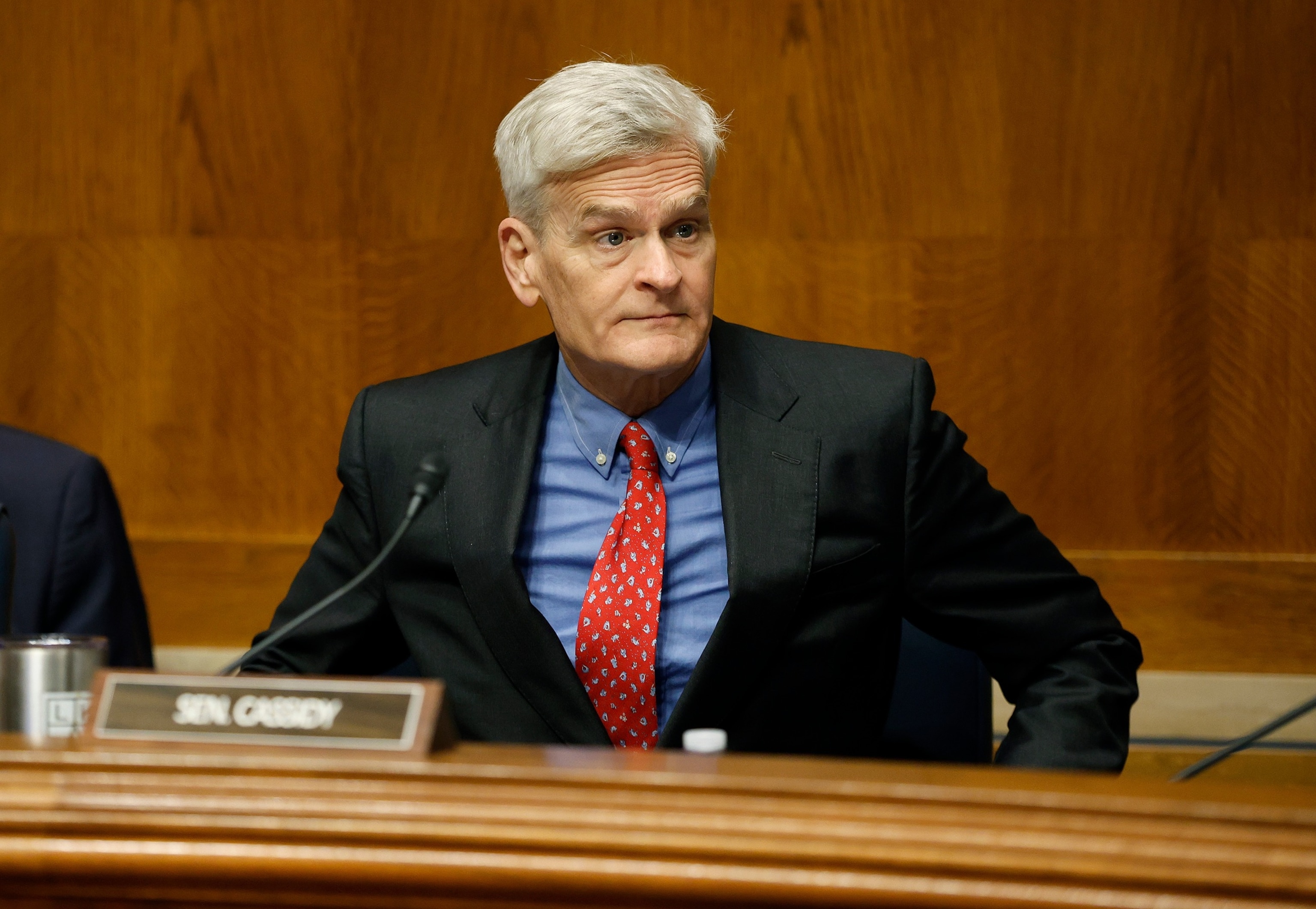
Markowski said potentially having access to a flexible spending account (FSA) could allow individuals to feel like they have more choice about the care they choose to receive. But he warned that having more access to funds is not an adequate substitute for insurance.
"Insurance is mainly a means to protect individuals from financial harm because health care is expensive," he said. "When you go to an emergency room, you don't want to get stuck with a $10,000, $20,000 bill. You want to be able to have some sort of protection in that case. So, I think that this is an interesting policy idea in terms of empowering individuals, but it's not necessarily a substitute for insurance."
Popular Products
-
 Psyllium Husk Supplement for Digestio...
$28.99$19.78 -
 Electric Heating Shoulder & Knee Vibr...
$93.99$64.78 -
 Sevich Hair Fiber Regrowth Spray With...
$53.99$36.78 -
 Sevich Chebe Hair Loss Treatment Set
$73.99$50.78 -
 Super Fenugreek & Rosemary Hair Regro...
$117.99$81.78