I'm Approaching 40 With No Real Retirement Plan. My Wife And I Have Accepted That I'll Just Keep Working.
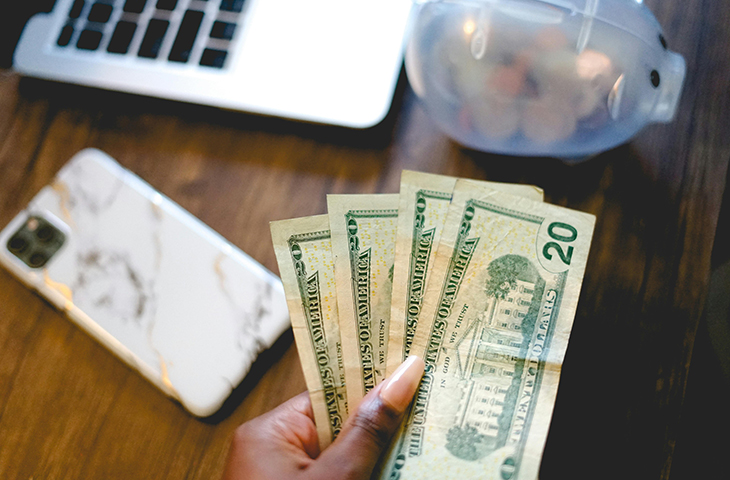
Delmaine Donson/Getty Images
- Every year, my wife and I have the same conversation about retirement.
- Another thing that happens every year? We realize that it's likely not doable.
- However, I'm OK with 'soft retirement.' Working gives me purpose.
I turn 40 in a few months. Every year around my birthday, my wife and I have the same conversation.
We make coffee, the kids disappear into a screen for an hour, and we pull up the numbers. Between our day jobs and my freelance writing side hustle, we earn enough to pay our mortgage, save a bit, and provide our kids with everything they need. On paper, we're fine.
What we don't have is what many people in our parents' generation had and worked toward: a date on the calendar when work stops, and retirement begins.
We keep running the numbers and landing in the same place
We've run the numbers with various spreadsheets and different assumptions, but always land at the same conclusion: There's no realistic version where I stop working at 60 or 65 and coast on savings for a few decades.
The honest projection is that I'll probably still be writing and working for myself in some form or another at 70 and beyond.
At first, this idea scared me. It felt like failure, like I'd missed a milestone everyone else was striving for. Both my parents retired with pensions and celebrations, so it's been ingrained in me that you work hard for 30 years, then kick back and relax.
But I don't buy it.
Planning around an ending I don't believe in
Traditional retirement planning assumes a cliff. You work, and then one day you don't, and everything after that is the reward. My wife and I have slowly stopped believing in the cliff. Not just because we don't think we'll be able to afford it, but also because I've realized I don't want it. I like working. It gives me purpose. I'd be restless and depressed within a month without it.
So our annual conversation has changed. It used to be 'How do we get to the finish line?" Now it's, "If we have no finish line, what do we want the next few decades to feel like?"
The part I can't put in a spreadsheet
There's a variable that no projection accounts for: whether my work will still exist in 20 to 30 years.
I write for a living, and I'd be lying if I said the rise of AI wasn't nestled in the back of my mind every time we open that spreadsheet. It's challenging to plan to write at 70 when I can't say for certain that the industry will need a human writer at 50. That uncertainty is newer than the retirement question, and in some ways it's scarier, because I may not even have the option to write for a living.
I can't control the wave, so my only real move is to get good at riding it. I've started folding AI into my own workflow, using it to research faster and handle the grunt work, so the part that's truly me, the judgment and the voice, is where I spend my time. Maybe that keeps me employable longer. Maybe it doesn't.
What we've landed on instead
The idea that intrigues me most is what people are starting to call soft retirement. Not stopping working altogether, but scaling back as I age and our finances are more secure.
It's the only version of the future that feels both realistic and good. I don't need to grind at this pace forever. But the plan where I keep writing a couple of days a week into my 70s on projects I choose, while doing more of the things I actually moved to a small town for, that one I can get behind.
Popular Products
-
 Electronic String Tension Calibrator ...
$41.56$20.78 -
 Pickleball Paddle Case Hard Shell Rac...
$27.56$13.78 -
 Beach Tennis Racket Head Tape Protect...
$59.56$29.78 -
 Glow-in-the-Dark Outdoor Pickleball B...
$49.56$24.78 -
 Tennis Racket Lead Tape - 20Pcs
$51.56$25.78