How Do People Feel About Robot Caregivers? Evidence From Japan
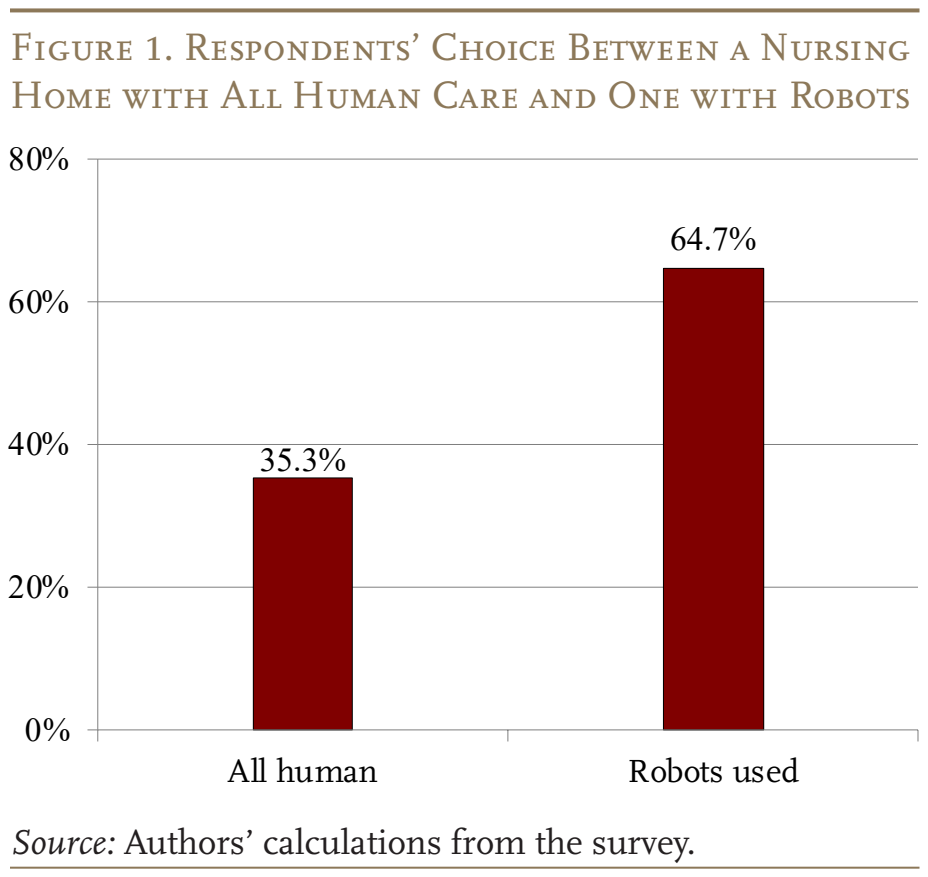
The brief’s key findings are:
Due to staff shortages in nursing homes, Japan has been at the forefront of experimenting with robots and assistive technologies. To gauge public support for these robotic aids deployed in nursing homes, a new study surveyed older Japanese adults who are not in nursing homes. The findings show strong support for the three types tested: mobility-aid robots, communication robots, and monitoring sensors. Strikingly, respondents are also willing to pay more for a facility that uses robots. These results could be instructive for the United States, but the degree to which older Americans would welcome robot caregivers is an open question. Introduction As populations age, a growing number of people need long-term care, such as help with basic daily activities such as eating, bathing, and mobility. While most people prefer to receive care at home, many older individuals with extensive care needs will spend at least some time in a nursing home. In many developed countries, the demand for such care is already outpacing its supply.1 A key constraint is the shortage of caregivers, a problem that is projected to intensify when baby boomers begin to reach their mid-80s.2
More Finance stories