Ai Learns To Read Pear Leaves: Hybrid Network Spots Disease With 92.69% Accuracy
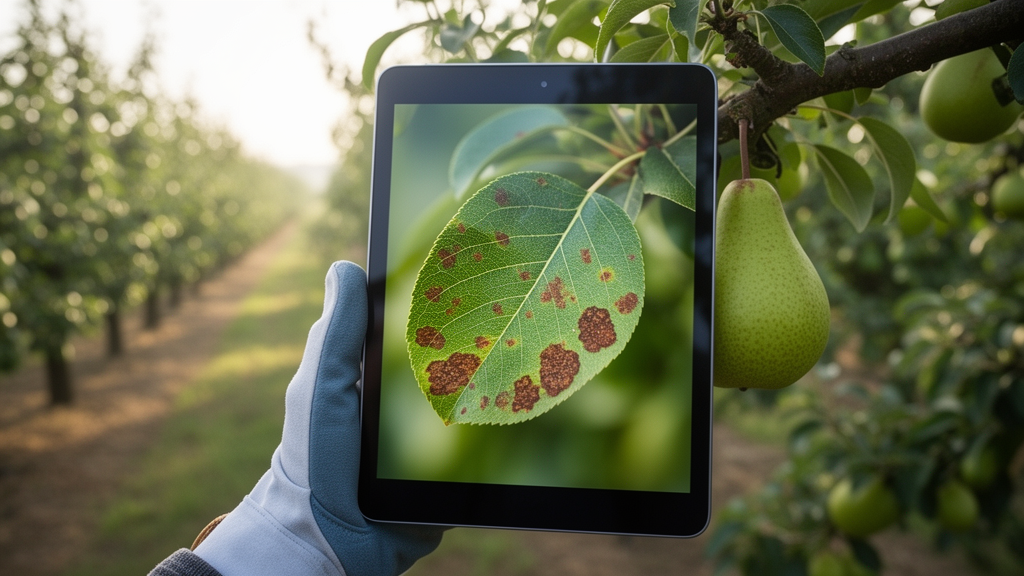
Pear orchards face a quiet but growing threat. Leaf curl, leaf spot, and slug damage spread through orchards long before symptoms reach the fruit, and by the time a grower notices, the economic damage may already be done. A research team at Vellore Institute of Technology in Chennai, India, has now built an artificial intelligence system designed to catch these diseases at the leaf stage, where early intervention can still save a crop. Their network, called SwinPyramidNet, achieved a classification accuracy of 92.69% on the DiaMOS Plant dataset, outperforming both leading convolutional neural networks and modern vision transformers on the same benchmark.
The stakes are considerable. Pears contribute more than 25 million metric tonnes to global production according to the U.S. Department of Agriculture, with China alone accounting for roughly 80% of the world’s pear cultivation area. The market value of the fruit is projected to climb from an estimated $32.35 billion in 2024 to $41.47 billion by 2028. Yet pear trees remain vulnerable to fungal diseases that distort leaves, hinder photosynthesis, and trigger premature leaf drop. Pathogens and pests are estimated to cause annual global crop losses of approximately US$220 billion, and conventional diagnosis, which relies on domain experts meticulously inspecting leaf surfaces, is labor-intensive, costly, and prone to human error, particularly in large-scale farming operations.