Are You Boycotting Black Friday?
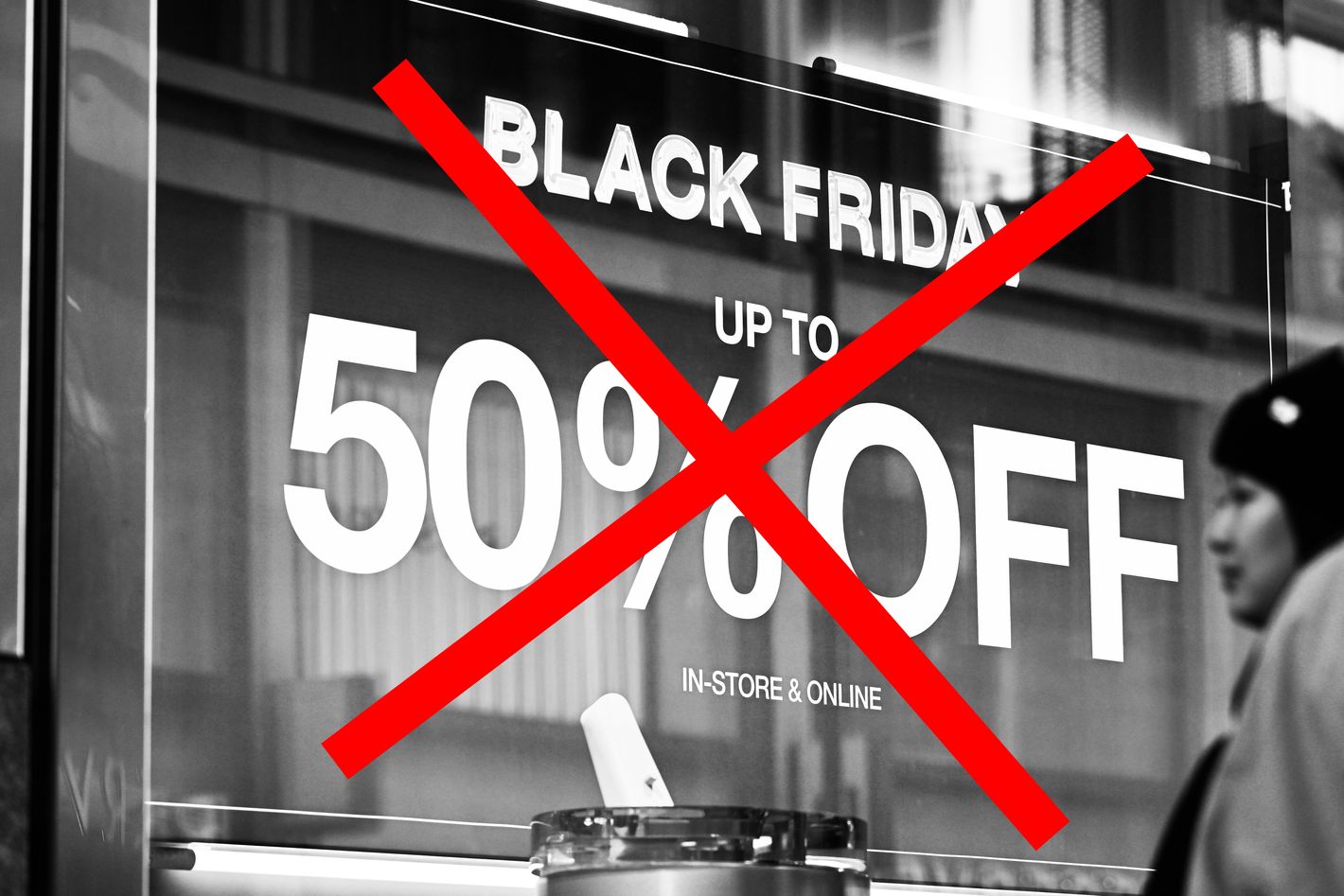
Photo-Illustration: by The Cut; Photos: Getty Images
As ads for deep discounts on laptops, cashmere sweaters, and pricey skin care bombard our social-media feeds, grassroots organizers are calling for two boycotts to protest the Trump administration’s policies and the widening income-inequality crisis. The Mass Blackout and We Ain’t Buying It campaigns are asking more than 186 million people in the U.S. who say they are planning to shop between Thanksgiving Day and Cyber Monday to skip purchases in the coming days.
Consumer boycotts have a long history in this country and have often been a tool to exert political pressure, and the most successful ones have been sustained campaigns with clear goals that generate negative publicity for corporations or hit their bottom line. Building on the momentum of the No Kings protests, which drew an estimated 7 million people in October, the two campaigns encourage Americans to flex their economic power. “No spending. No work. No surrender. The system isn’t broken. It’s working exactly as designed—for the wealthy,” the Mass Blackout website says. “We’re not targeting small businesses or communities—we’re targeting the corporate systems that profit from injustice, fuel authoritarianism, and crush worker power.”
Mass Blackout is organized by a coalition of progressive groups including Blackout the System, the People’s Sick Day, the Progressive Network, American Opposition, and the Money Out of Politics Movement. Advocates are calling for people to freeze all their spending between Wednesday, November 26, and Tuesday, December 2. (Small Business Saturday is exempt from the boycott, according to organizers.) Organizers are also asking for people to call out of work if possible, arguing that the disruption would showcase how much the American economy depends on labor. In lieu of these two actions, advocates say participants can also limit their shopping, cancel subscriptions, restrict their use of streaming services and social media, and make donations to Feeding America. If any purchases are really necessary, they encourage supporters to support only small, local businesses and pay them in cash.
Meanwhile, progressive groups including Black Voters Matter, Indivisible, Working Families Party, Until Freedom, and 50501 are taking a narrower approach with the We Ain’t Buying It campaign. The coalition is specifically calling for boycotts on three corporations: Target, which caved to Trump and rolled back its DEI initiatives earlier this year; Home Depot, which has denied that it cooperates with federal immigration agents but has nevertheless allowed them to conduct operations at its stores nationwide; and Amazon, due to Jeff Bezos’s financial support of the administration. The boycott is meant to last from Thursday, November 27, through Monday, December 2 — i.e., from Thanksgiving until Cyber Monday — and encourages supporters to shop only from local businesses, donate to mutual-aid groups, and avoid online purchases.“We need to push back against this administration and the billionaire elites backing it,” organizer Hunter Dunn told The Guardian. “This is just one piece of a larger puzzle.”
Related
Popular Products
-
 Wireless Health Tracker Smart Ring - R11
$131.56$65.78 -
 Electric Hair Straightener and Curlin...
$161.56$80.78 -
 Pet Oral Repair Toothpaste Gel
$59.56$29.78 -
 Opove M3 Pro 2 Electric Massage Gun
$901.56$450.78 -
 Portable Electric Abdominal Massager ...
$45.56$22.78