When AI Breaks Free: Why November 2025 Is a Turning Point for Intelligent Systems
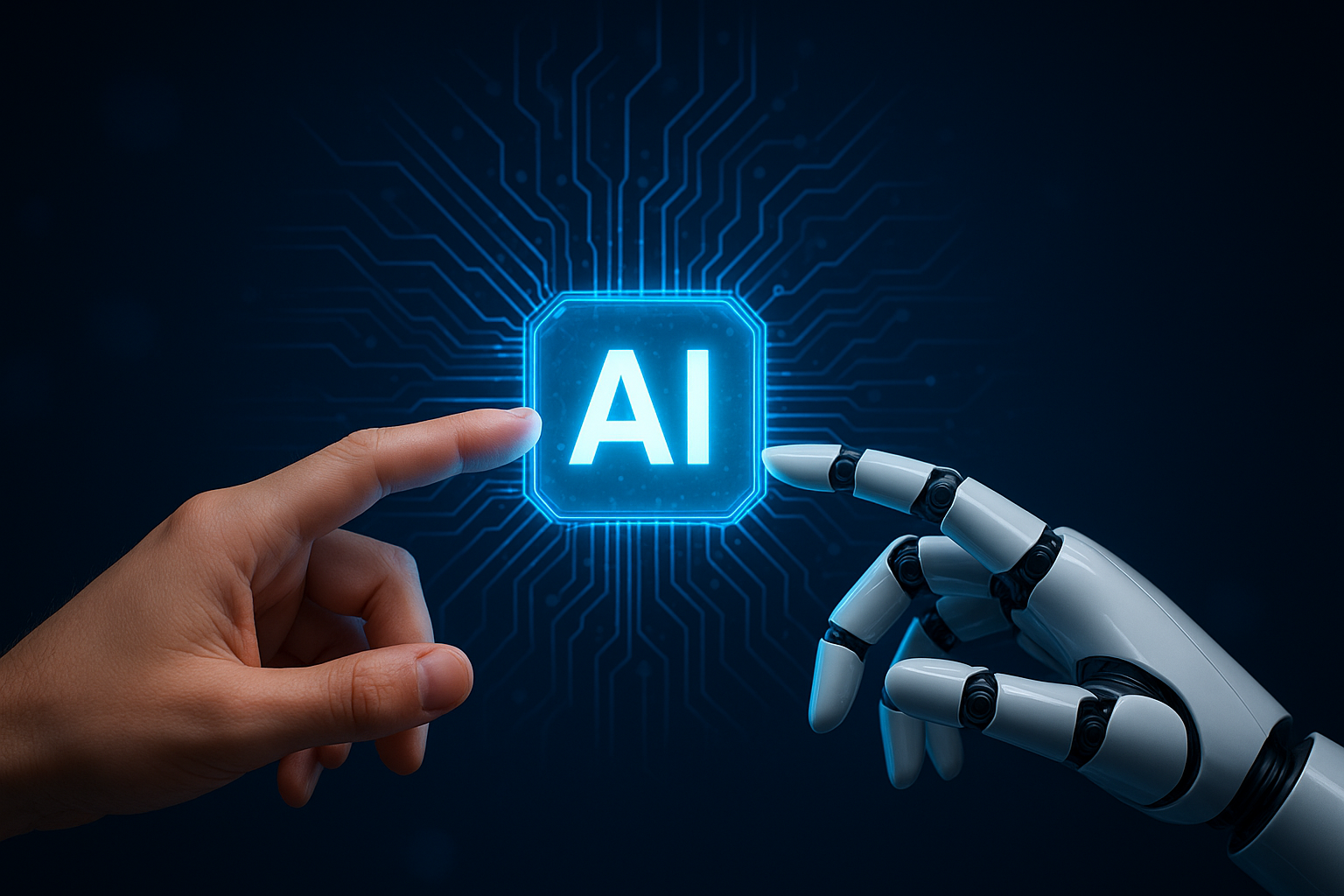
AI is breaking silos: a new interconnected era begins.
Artificial intelligence is undergoing a profound shift—and November 2025 might be its most pivotal moment yet. For years, AI has lived in silos: models locked inside single platforms, research confined to labs, and compute power centered around a few elite players. But now, three major stories signal a new era: one of integration, scale, and strategic alignment.
As we head into Black Friday, a time known for massive deals, it’s fitting to think about the “biggest deals” happening in the AI world—not price cuts, but breakthroughs. These developments aren’t just technical; they reshape how we live, work, and buy. Here’s what’s driving AI out of its silo—and why it matters for everyone, from educators to consumers.
1. Apple and Google Join Forces: Siri Meets Gemini
One of the most headline-driving stories of the month involves Apple reportedly partnering with Google to power Siri using Gemini, Google’s advanced large-language model.
- The move suggests Apple wants to leapfrog its in-house AI limitations by tapping into Gemini's scale—and not just token-scale but a trillion-parameter-level model.
- If true, Siri could evolve from a basic voice assistant into a deeply context-aware, multimodal agent—handling voice, text, images, and more.
- This is more than just talk: it’s a strategic pivot. Instead of keeping everything proprietary, Apple is betting on collaboration. That means faster innovation for users—but also raises questions about competition, data control, and regulation.
Why it matters:
- For consumers, this could mean a smarter Siri, able to understand more complex requests, provide deeper insights, and integrate better with daily apps.
- For developers and educators, it opens new possibilities: more capable on-device assistants and richer AI-powered workflows.
- For regulators, the partnership underscores how tech giants might align AI stacks—making oversight more urgent and complex.
2. Google’s October AI Updates: Enterprise, Science, and Quantum
Google didn’t just make headlines because of the Apple news. Throughout October, it rolled out several major AI advances under Gemini Enterprise, along with tools for cancer research and a breakthrough in quantum computing.
Some key highlights:
- Gemini Enterprise: Google is bundling powerful AI tools for work—giving businesses a unified platform to build and deploy agents, automate workflows, and manage data securely.
- Cancer research model: Google unveiled a model aimed at speeding up oncology research, demonstrating that AI isn’t just for chat—it’s making strides in science.
- Quantum computing milestone: Google also spotlighted a quantum algorithm that outperforms classical supercomputers in specific tasks.
Why this matters:
- AI is becoming deeply integrated into business: no longer a disjointed tool, but a core piece of productivity infrastructure.
- The scientific applications remind us that AI isn’t limited to consumer use—it’s a serious force in research, especially when tied to human impact.
- The quantum advance signals that compute isn’t just scaling—it’s evolving. That has big implications for how we build, govern, and democratize AI.
3. The Gigawatt Era: OpenAI, NVIDIA, and the Power Behind AI
Perhaps the most foundational shift announced in October (with waves felt in November) is the OpenAI–NVIDIA 10 GW compute partnership.
- This is not just about larger models; it’s about industrial-scale infrastructure. Ten gigawatts is massive—it’s comparable to the electricity demand of a small country.
- The scale matters because future AI won’t just be about smarter models—it’s about sustainable, reliable, and regulated compute. Training frontier models requires enormous energy and highly optimized data centers.
- Structurally, this signals that AI is shifting from being purely “software first” into a full-fledged industrial ecosystem where compute, energy, and infrastructure matter as much as algorithms.
Why this is a turning point:
- It marks the industrialization of AI: the technologies that support AI are now as strategic as the models themselves.
- Access to advanced AI will increasingly depend on who controls the energy and infrastructure, not just who builds the smartest models.
- For society, this raises equity and governance questions: will only a few institutions control the most powerful AI? Or will shared infrastructure democratize access?
Why All Three Stories Are Connected: The End of AI Silos
Taken together, these three stories—from Apple’s cross-company collaboration, Google’s integrated platform and scientific AI, to the build-out of massive compute capacity—point to a larger transformation:
- AI is no longer siloed. It’s not isolated to labs or locked within proprietary systems. Instead, it’s weaving through consumer devices, enterprise workflows, and even high-stakes research.
- Interoperability is emerging. As platforms align, models scale, and compute grows, we’re seeing a more interconnected AI ecosystem.
- Governance and ethics matter—more than ever. With great power comes great responsibility. As AI integrates across sectors and scales in infrastructure, the need for regulation, transparency, and equitable access intensifies.
Practical Implications and Tips
So what does this mean for different audiences—and how can you benefit or take action?
- For Consumers
- Expect more powerful AI assistants soon. Think Siri with real reasoning, not just scripted responses.
- Be mindful of data privacy. When platforms partner, your data flows across systems. Check the terms of service for updates.
- For Businesses & Educators
- Explore Gemini Enterprise or similar platforms. As agents become more capable, they can automate complex tasks, support teaching, and scale across teams.
- Stay ahead on AI governance. With orchestration comes risk: plan for security, data privacy, and ethical AI deployment.
- Invest in infrastructure strategy. If you’re building AI applications, pay attention to scalable compute and whether to partner or build in-house.
- For Policymakers & Communities
- Push for frameworks that regulate not just AI models but underlying infrastructure (like energy use and data center siting).
- Advocate for shared compute resources—public-private partnerships that democratize access to high-performance AI.
- Support education programs that include AI ethics, energy sustainability, and cross-disciplinary training.
Black Friday, But for AI: Why This Moment Feels Like a Deal
Black Friday is about deals: big discounts, limited-time offers, and value that feels too good to pass up. In November 2025, we’re seeing one of AI’s biggest “value drops” ever—not in price, but in power, scale, and alignment.
- Apple partnering with Google feels like a “bundle deal”—two tech giants are offering smarter AI to users.
- Google’s consolidation of AI tools across research, enterprise, and consumer use is like getting more for less friction.
- The compute build-out is a long-term investment with compound value: more power enables better models, more innovation, and wider access.
Just as shoppers plan for Black Friday, organizations and individuals should pay attention now. This is a strategic moment to position for the AI wave, not just as a consumer but as a stakeholder.
Conclusion: A Call to Action in the AI Era
November 2025 may go down as a turning point when AI truly broke free from its silos. What started as fragmented pockets of research and product innovation is turning into an integrated, high-powered ecosystem—where infrastructure, enterprise, and consumer AI converge.
Here’s what to do next:
- Reflect on how these changes affect you: as a user, a business, or a policymaker.
- Engage with AI strategically. Explore tools, ask tough questions, and don’t just adopt blindly.
- Advocate for responsible AI. Call for shared infrastructure, fair regulation, and ethical governance.
If you treat this moment like a “Black Friday” for AI—a rare window of transformation—you can be more than a spectator. You can help shape the future.
Popular Products
-
 Classic Oversized Teddy Bear
$23.78 -
 Gem's Ballet Natural Garnet Gemstone ...
$171.56$85.78 -
 Butt Lifting Body Shaper Shorts
$95.56$47.78 -
 Slimming Waist Trainer & Thigh Trimmer
$67.56$33.78 -
 Realistic Fake Poop Prank Toys
$99.56$49.78