The Odd Way Packard Tested The Quality Of Its 1938 Models
In the brochure for its 1938 Super 8 and 12 models, Packard provided detailed views of their straight-8 and V-12 engines, chassis, suspension hardware, transmissions, and other components. How did the company test the quality of its vehicles to ensure that they were “the finest Packards ever built”? One word: “kidnaping” (yes, that is the alternative way of spelling “kidnapping” that Packard used).
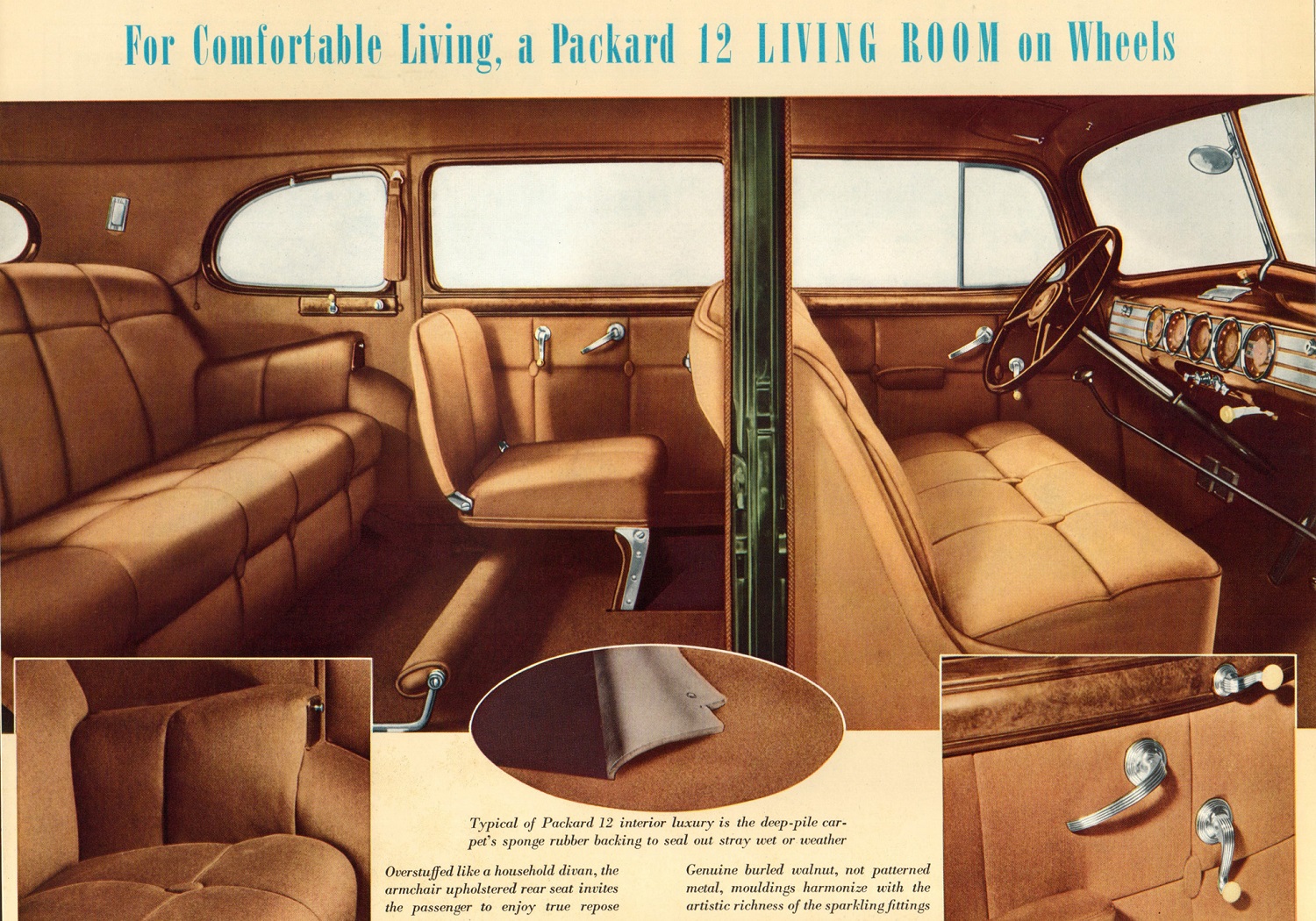
By 1938, the world was nearing the end of the Great Depression. The massive economic downturn had caused several luxury automakers to develop smaller, less expensive models to offer. Packard was aware that “recent years have laid great stress on the small and efficient in motoring,” but it also sensed that grand, high-end transportation was going to come back (despite the fact that there was a recession from May 1937 until June 1938). That explains why it furnished the 12’s interior, which it called a “Living Room on Wheels,” with genuine burled walnut trim, deep-pile carpet, and an overstuffed rear seat. Packard also went to great lengths to make its cabins quiet, installing 17 combinations of insulation at 31 points in the body.
But the 1938 Packards had to be more than luxe and comfortable — they also needed to be of high quality. To maintain quality control over its raw materials, Packard poured its own metals and made its own forgings. Building a Packard Senior model involved about 10,000 inspections. Not only did engineers measure components with highly accurate Johansson blocks, but they also checked the accuracy of the blocks themselves with a machine that could measure to a millionth of an inch.
Of course, the truest test of a car has to be done outside, not in a laboratory. That’s where Packard’s “kidnaped car” test came in. Employees from the Packard Proving Grounds would drive 20 miles to Packard’s factory in Detroit, randomly choose a finished car, then take it over different types of terrain and test it in various ways for approximately 25,000 miles. They’d drive the car day and night on the 504-acre facility’s track, charge through deep sand, splash through a shallow body of water, pull a 10-year-old model known as “Mr. Packard” to simulate going up a mountain grade, and more. Once the evaluation was done, engineers would completely tear the car down, take measurements, and log any improvements that could be made to the car.
No word on whether Packard put the “kidnapped” cars back together and sold them or just kept them. Hmmm … perhaps some of these Packards are still out there. At the very least, the improvements made possible by these test mules still exist.
Popular Products
No popular products available in this category.