The Most Hated Vehicle Features, According To My Neighbors

Over the last several years, I’ve rarely left a parking lot without questioning at least one random person how they felt about their vehicle. These conversations typically include a moment where I ask people about which features they do and do not like — providing a real-world glimpse into some of the most-hated aspects of today’s automobiles.
While hardly a proper survey, the resulting pocket-sized notebooks have been filled with useful information and keep me plugged into how drivers in my neck of the woods feel about their cars. The biggest lesson has been that the things people like about automobiles are very personal and extremely varied. It often boils down entirely to individual preference, legitimate needs, and how well the marketing worked on them.
Someone doing a lot of towing might champion modern camera systems for helping them back up to a trailer hitch. Meanwhile, the lady who just wanted a cheap commuter conveyance will praise fuel economy and the fact that the dealer happened to have the car in a color she liked. People with large families like smart cargo and seating solutions. Enthusiasts like power and a vehicle that provides good driver feedback.
The point is that I never saw a surplus of overlap when it came to beloved features. However, there was a lot of commonality in the things random drivers did not like. Having mentioned on the website that I was keeping rough tabs in the past, a few regular readers asked me to share some takeaways from the automotive autism contained in my notebooks. I have decided to compile the features that repeatedly came up as negatives, likewise offering some potential solutions for any individuals who have been struggling with them. Just remember that this isn’t a formal survey. It’s the result of my bothering random strangers about their cars.
Automatic Stop-Start:
Among all the complaints I hear about automobiles, automatic stop-start has to be the most enduring. It’s the one I’ve been hearing people groan about for the longest time and the frequency of complaints has not slowed down. Practically everyone I’ve ever met dislikes the feature and there is evidence that it can put more strain on the engine over time.
It exists as a way to help automakers meet government efficiency requirements and presumably does help curtail pollutants being put into the atmosphere when a vehicle is out of motion. Some drivers may even see an appreciable difference in fuel economy. But, in terms of engine wear, it probably depends on your use case.
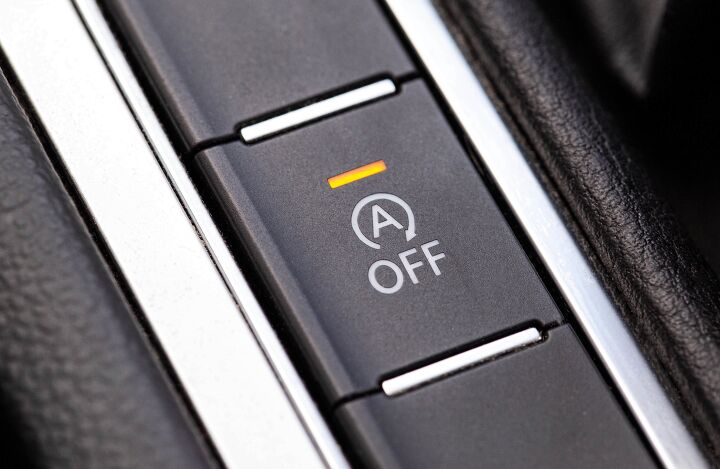
Idling a car for long periods of time isn’t typically a good idea, so it can offer some help there. If your daily commute includes a lot of stop-and-go traffic where there’s more stop than go, auto stop-start might actually be worth using. However, routes that just have a few quick stops where you’re setting back off after a few seconds have little to gain. Repeatedly restarting an engine that’s up to temperature isn’t as bad as a bunch of cold starts. But you’re undoubtedly putting added strain on the battery and the starter itself.
The upside is that automakers have been fitting more robust starters to automobiles to account for auto stop-start. So those who don’t use the system should see those components lasting a little longer.
Curiously, when I asked why people disliked the system, none of the above came into play. Most people simply don’t like how it feels, equating it to a stalled vehicle. This included divers that have lived with it for years. But there were a few complaints about how poorly auto start-stop plays with the HVAC system.
Solutions to this one are varied. Some automakers give you the option to shut the system down via a single button. However, you’re often required to press that button whenever you’ve exited the vehicle. Other automakers don’t even give you that capability, requiring a different plan. Mine is to put those vehicles into a specific drive mode (usually sport), that negates stop-start. But this is still tied to individual models and is hardly ideal, so it pays to consider all of the above whenever you’re purchasing a new automobile.
Electronic Doors:
This one is an odd pick because it was something very few people actually had. But those that did all seemed prone to bringing it up as a problem.
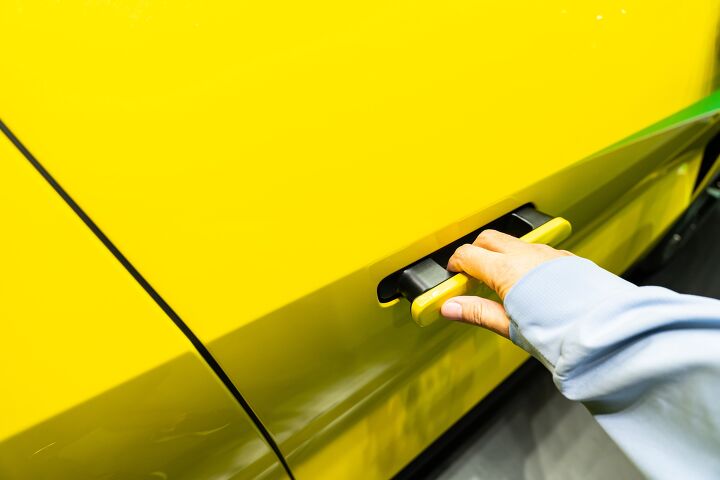
Electric doors come in all shapes and sizes but they share the same drawbacks. They’re broadly less useful than a traditional door with a handle. Pressing a button so the car can pop the door open slightly just creates an additional step. You’re still having to use your own strength to open it the rest of the way. The same applies to electronically recessed door handles.
Without power, you cannot even get into the vehicle without finding the hidden keyway. We’ve even seen instances where some vehicles come with special exterior jump points you’ll need to use before you can open the hood in order to jump start the main battery. Once that's been done, owners can then open the car door.
Normal access points can also become inaccessible following an ice storm. I’ve lived most of my years in colder climates and it’s not uncommon to struggle getting into a vehicle that’s been encrusted with ice. Electronic doors make this process even worse because there’s effectively nothing to grab onto. Recessed door handles (pictured below) may fail to rise and buttons will need to be de-iced before you can try to use them. This was actually gripe number one among motorists with electronic doors, which is no coincidence.
Ultimately, this is a feature that increases complexity without any tangible improvement in core functionality. Some have compared electronic doors to electric windows. But the latter actually provides additional utility by giving an operator a way to adjust ventilation while driving in ways that would otherwise be impossible. Unlike today's electric doors, they’re not exclusively for showing off.
In terms of solutions, there’s not much that can be done outside of maintaining the battery and making sure your vehicle is never parked outdoors on a freezing-cold day. Alternatively, you can attempt to avoid cars with electronic doors or living in places that see snow.
Telematics:
This one isn’t so much about a singular feature as it is the result of modern vehicle connectivity. Data collection is something we’ve covered regularly, so there’s little reason to get into the nitty gritty. Regular readers know that the amount of information automakers (and other industries) are collecting on them has grown truly staggering. But I have been surprised by how many random drivers have likewise grown aware in recent years.
While a great many of the people I encounter don’t know what that telematics mean, many have grown aware that their car is transmitting information back to the manufacturer. Some have strong negative opinions about this. However, it’s often tied to a personal story about how they entered into some agreement (often unwittingly) to share their driving data as a way to lower their insurance rates.
Interestingly, I’ve never heard a single story that ended with “and then my insurance premium went down, making me happy.” The person usually goes into a rant about how their rates actually increased after the agency decided they had too many instances of hard braking or acceleration. Several also said they were penalized for driving too much at night.
Granted, I may simply be hearing from aggrieved customers with a negative bias. My “research” is entirely anecdotal and calculated by nothing more than taking a few notes after speaking with car-owning strangers. But this one has really started to become an increasingly common complaint.
The obvious solution is to carefully read contracts before you sign them and protect your data whenever possible. But a more comprehensive approach would be to physically disable your vehicle’s ability to transmit information. However, you’d be losing a lot of modern features and possibly your warranty in the process — making it a fix that won’t appeal to everyone.
Modern Infotainment:
Similar to telematics, this is another extremely broad category. But it’s a common one to hear complaints about. Issues are varied, encompassing everything from how touchscreens interface with other devices to generic complaints about simply wanting more buttons.
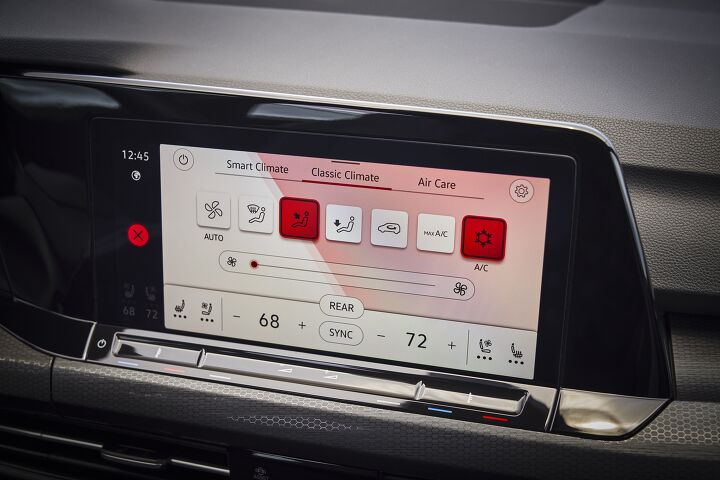
Automakers have been trying to convert vehicles into smartphones on wheels for about a decade now. But drivers seem to have grown increasingly displeased with the trend due the fact that navigating screens while driving is less intuitive than traditional switchgear. I’d wager every penny I had that touchscreens have contributed to the rise in automotive accidents we’ve seen in recent years.
Beyond buying a car with more buttons, there are not many remedies for this issue. Fortunately, the industry seems to have caught on to the fact that people are souring on modern cabin controls. Some of them have made an effort to bring back more buttons (e.g. Volkswagen). However, automakers like having people interface with touch controls and voice commands. This is because they’re presently cheaper to equip and effectively force drivers to interact with connected features tied to novel revenue streams. Screens have become a major component in how automakers anticipate making their profits. Similar to telematics, this is something that won’t be going away without a fight.
Conclusion:
It’s worth noting that most of the above pertains to newer models. While I do speak with people driving more-mature vehicles, those owner complaints invariably revolve around how old the cars are. Individual options are rarely considered when the headliner is falling down and the engine has 250,000 miles on the odometer and a persistent knock.
But there were a few disliked features common to some older models. Cylinder deactivation (which goes by many names) was a big one. This was particularly common among self-proclaimed enthusiasts who had either heard about or experienced unwanted engine wear. Owners of V8 HEMIs built after 2005 were prime candidates for this. But a large number of full-size truck and Corvette owners confessed to me that they were similarly worried.
Like auto stop-start, cylinder deactivation is basically a way manufacturers attempt to cope with efficiency requirements while helping owners achieve improved fuel economy. On paper, it seems like a good idea. But we’ve seen these systems yield premature lifter, solenoid, and camshaft failures on numerous models. Many of the drivers I’ve spoken with confessed to having their vehicles’ modified to undo the feature. However it can sometimes be circumvented by putting the car into a specific (usually sport-focused) drive mode.
LED headlamps were also clearly despised by the public. But only when it was equipped to someone else’s car. Most people seem to prefer the blinding nature of today’s headlights when the power is being emitted from their vehicle. The inverse was true when those lumens are part of oncoming traffic.

Beyond that, there’s a general sense that most drivers don’t really see automobiles as having gotten better in recent years. Many have the perception that modern vehicles are less dependable than their predecessors and front loaded with less-than desirable technology. Even among people that seemed largely pleased with their current car, there were a lot of mentions about how they still “missed” whatever they were driving before. Queries into why typically resulted in statements about how they were just easier to live with on a daily basis.
Anecdotal, to be sure. But hearing the same statement over and over, left me wondering if that was just their bias showing or real evidence that modern trends have not resulted in vastly improved vehicles.
Chime in if you want to provide a few more data points.
[Images: MAYA LAB/Shutterstock; HenadziPechan/Shutterstock; Wongsakorn 2468/Shutterstock; Volkswagen; Flystock/Shutterstock]
Become a TTAC insider. Get the latest news, features, TTAC takes, and everything else that gets to the truth about cars first by subscribing to our newsletter.
Popular Products
No popular products available in this category.