The Ev Money Machine
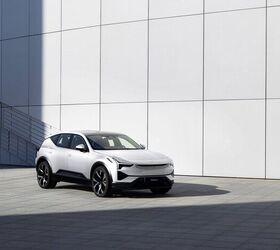
Electric vehicle (EV) manufacturer Polestar announced last week it is beginning efforts to provide bi-directional charging—from home to vehicle and vice versa—starting with residents in California who get a Polestar 3.
This vehicle-to-home (V2H) approach is being offered by other OEMs as well, and almost seems to becoming as much of a rationalization for getting an EV as quietness and torque.
Michael Lohscheller, Polestar CEO, said: “Bi-directional charging is a gamechanger, not only for the car industry, but the home energy ecosystem. As it lowers your total cost of ownership and makes your car work for you even when parked, this makes the choice of driving a Polestar even more attractive.”
Why buy a just a means of transportation when you can get transportation and income?
Not only is the notion that an EV is used as a backup energy source to power a house in the event of a blackout, but that on a more regular basis, with the development of vehicle-to-grid (V2G), there is the possibility of energy arbitrage: buying energy from the utility when the price is low and then selling it back to the grid when energy is more expensive.
Really?
This sounds a bit like day trading in your basement during the day and using your EV to make money at night by selling its stored power back to the grid.
Yes, whole-house generators are expensive. And the idea of using one’s EV can seem appealing.
But just as it is necessary to get electricians in to install a generator, there needs to be technicians at a residence to install a charger that is capable of performing the exchange before getting the lights back on and the refrigerator humming.
There also needs to be arrangements made with the utility: someone just can’t start sending power to the grid.
Ford recently announced: “with Ford Home Power Management, in select markets where electricity rates change throughout the day, customers that purchase the Ford Charge Station Pro, Home Integration System, Home Backup Power software, and receive the Home Power Management software enhancement can charge their F-150 Lightning with lower cost electricity — often overnight during off-peak hours — and then use that stored energy to power their home at a later time when grid electricity rates are higher during peak hours.”
The purchase for those items is a few grand, so before one starts cashing in on selling energy back to the grid there needs to be that cost covered.
(This also raises an issue of the “off-peak hours.” If the number of EVs that had been anticipated by OEMs were on the streets right how and all of them were plugging in during “off-peak hours,” wouldn’t the off-peak become at least peak-ish?)
Uh-Oh
In AAA’s most recent survey of U.S. consumer interest in EVs, which was conducted in March 2025, before the EV federal tax credits were eliminated, 27% said they were concerned with “challenges installing charging stations at their residences.”
As Ford CEO Jim Farley has pointed out, the “Essential Economy,” which includes skilled trades people like electricians, is facing labor shortages and declining productivity, so that challenge is real in many cases.*
In addition to which, 57% said they think EVs are unsuitable for long-distance travel, 56% that there is a lack of convenient charging stations, and 55% are concerned about running out of charge while driving.
How many people go into a dealership and look at a non-electric F-150 and ask the sales person questions like:
“Can I take it on a long trip?”
“Are there plenty of gas stations?”
“What is the likelihood I will run out of gas if I ignore the Distance to Empty feature on the information display?”
Costly Consideration
There are two things at play here regarding the whole V2H and V2G approaches. First of all, you need to own an EV, which apparently fewer are interested in, and for good reason: They are expensive.
As Cox Automotive’s Director of Industry Insights Stephanie Valdez Streaty recently wrote, “In October, the average transaction price (ATP) for new electric vehicles climbed to $59,125, up 1.6% from September and 2.3% year over year. The price premium over internal combustion engine (ICE+) vehicles widened to $9,359, while incentives dropped to their lowest level of the year at 11.1%.”
There’s a lot to unpack there. Consider: the tax credit ended at the end of September, yet the price of EVs went up. The price premium over an ICE+ vehicle—with the “+” indicating hybrids—is up, too, and you’ve got to wonder how many times it would be necessary to advantageously arbitrage electricity to come anywhere near $9,359.
Cox found that EV sales in October were down 48.9% from September, and down 30.3% from October 2024.
The mainstream buyer is going to make the market. Scale isn’t achieved by selling to the well-heeled few.
So by arguing that you can buy an EV and use it to power your home in lieu of buying a vehicle and a whole-house generator, some who are somewhat frugal might find that to be an advantage.
But, and this gets to the second point at play: getting V2H capability means it is necessary to have a home charger (as well as other tech), which would mitigate concerns about finding energy to charge a vehicle on a public network—still, there needs to be a consideration of those who might need to travel more than a few hundred miles every now and then.
The concern about the public network is very real and often warranted.
Back in the headier days of 2023 the National Renewable Energy Laboratory (NREL) released a report identifying what it thought the EV charging infrastructure in the U.S. would need to be by 2030 to support an estimated 33 million EVs.
NREL calculated that 64% of all charging would be done at single-family homes, with 28% being done at public chargers.
In other words, even when the Biden Administration was bullish on EVs and some $7.5 billion were appropriated to build out a public charging infrastructure, the NREL figured that home is where the electricity is.
(The goal was 500,000 chargers by 2030. The National Electric Vehicle Infrastructure (NEVI) portion of the program—which represents $5 billion—isn’t getting a whole lot of traction. In providing a status update as of May 2025, the Congressional Research Service wrote: “An estimated 57 NEVI-funded charging stations had opened across 15 states as of February 10, 2025; more than half of these were located in Ohio and New York.”)
While the overall number of EVs is likely to be less than the number projected in 2023, odds are that the proportion of charging requirements will stay the same.
So OEMs need to encourage EV buyers to install charging equipment at their residences because if that’s where the lion’s share of charging is going to be done, then there’s no upside in pretending that it won’t.
And if people are going to be installing chargers, they might as well go all in and get the transfer equipment that will make them capable of selling electricity back to the grid, right? After all, if they can handle the price of the EV, what’s a few thousand bucks more?
*Another consideration for the Essential Economy: workers at auto repair shops that can work on EVs. According to the PartsTech “2025 State of General Auto Repairs Shops” report, 25% of shops don’t work on EVs and 70% report EVs account for 10% or less of their annual car count. What is the number-one service performed on EVs? Tire maintenance, at 64%. Doing something EV-specific comes in 6th (after brake maintenance and repairs; suspension repairs; fluid maintenance; HVAC maintenance and repairs): Battery health check, at 14%. How many technicians have received specific EV repair training: 29%. The confidence level of the team members in repairing EVs: 39% are not confident, 35% are somewhat confident, 19% are confident, and 7% are very confident. Which probably doesn’t raise the confidence of consumers.
Long-time automotive journalist Gary Vasilash is co-host of "Autoline After Hours" and is a North American Car, Truck & Utility of the Year juror. He is also a contributor to Wards Auto and a juror for its 10 Best Interiors UX and 10 Best Engines & Propulsion Systems awards. He has written for a number of outlets, ranging from Composites Technology to Car and Driver.
The TTAC Creators Series tells stories and amplifies creators from all corners of the car world, including culture, dealerships, collections, modified builds and more.
Check out Gary's Substack here.
[Image: Polestar]
Become a TTAC insider. Get the latest news, features, TTAC takes, and everything else that gets to the truth about cars first by subscribing to our newsletter.
Popular Products
No popular products available in this category.