Mclaren And Nissan Boosts Buy Time, But Uk Lags In Ev Race
New McLaren factory and Nissan SUV bring investment and create jobs – but UK auto's growth is still rooted in ICE
The UK automotive industry is facing tough times, as starkly demonstrated by the recent news about JLR cutting around 4000 jobs, so it’s important to note when there is positive progress, too.
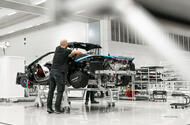
McLaren will create at least 1000 direct jobs as part of a £500 million investment in a second UK production site for its much-anticipated line-up of new models, including an SUV. Meanwhile, Nissan will invest £170 million to bring a new model, the Kicks, to its Sunderland plant, where it will help to safeguard jobs on Wearside.
That both McLaren's and Nissan's press releases featured quotes from the prime minister and business secretary respectively suggest UK manufacturing is being taken seriously, which can only be good news.
The announcements reflect the breadth of British engineering excellence, covering everything from supercars to mass-market mainstream models. But they raise questions for the longer-term picture because they are purely focused on combustion cars. McLaren is holding off on electric cars because demand is not yet there; Nissan's addition of the hybrid Kicks to Sunderland is partly a result of the firm scaling back its EV plans due to slowing sales growth (although it is in talks with Chinese firm Chery to fill some capacity there).
Those EV rollbacks follow Mini pushing back plans to produce the Cooper EV in Oxford, again due to uncertainty over regulations and the speed of EV uptake.
With the Leaf and new Juke, Nissan is still responsible for the bulk of the UK’s EV output, and it has invested in building battery plants; JLR is also expanding its EV production in this country, with the new Range Rover Electric, Range Rover GT and Jaguar Type 01 all set to be built in the Midlands.
But Britain risks lagging behind other countries such as Spain, where the Volkswagen Group’s small EVs are built and a new MG plant is under construction. Chinese firms including Leapmotor and Geely are also helping to shore up production at existing car plants.
There’s also a growing push by Chinese firms to build EV factories in eastern Europe, where costs and wages are lower. As with MG’s Spanish plant, these are new full-scale car factories – something Britain hasn’t seen for decades.
This is a uniquely challenging transition period, and it highlights again the need for clear rules that enable manufacturers to build and sell the cars customers want while encouraging investment for the longer term.
The government is right to celebrate good news. But it should also help to ensure the UK car industry can continue to produce the cars customers actually want to buy while also encouraging the investment and skills development that will help it thrive for the longer-term in an electric future.
Popular Products
No popular products available in this category.