Life's Never Boring In A Gt3 Touring: We Built, And Lived With, Our Dream 911
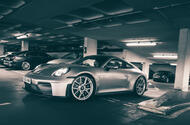
Can you have too much of a good thing? We spend a month with the best driver's car on sale
Porsche 911s, they say, are simple creatures. However, the whirlpool of decisions I'm facing as the evening wears on, with pressure mounting to get a GT3 build spec to Porsche GB's press office, says otherwise. To doppelkupplungsgetriebe or not? I could rustle up a dissertation on this thorniest of topics alone. And what about the new-for-2026 buckets with the removable headrest padding for better, er, helmet ergonomics? On switchbacks they'll bear-hug you like grandma but their bolsters are kryptonite for my atrophied hip flexors. Is the fire extinguisher a bit vainglorious? And since when do ceramics cost as much as a decent 987?!
They want the final spec by 9am, when it will be fired off to Zuffenhausen and an interminable wait will begin. I over-cogitate everything, start afresh when configurator options don't tessellate and often ponder if I'd be better off requesting no extras at all. Now that would be a real unicorn: a breadline Porsche 911 GT3. But no, they'd never stand for such insolence. On I go through bloodshot eyes. It is, in a great many ways, the perfect night in.
That was winter 2025, when a last-minute offer to option the UK's next 911 GT3 media workhorse hit Autocar's inbox. Yes, one of the good days. The kicker was that I had 18 hours to do it. That's ample time to work through Porsche's slick configurator if you're knocking up the pixels for fun. But having the thing crafted for real, at considerable material cost? It changes the game. There was also the fact that, all being well, this car would outlive us all. Suddenly the month Autocar would spend with 'our' 911 GT3 felt of less significance than having it built at all.
Fortunately road testers have several rough-draft 911 specs (that's per derivative) rattling around their brains at all times. So when Porsche said this GT3 would be a Touring, I knew the vibe should be old-school charmer, understated and usable, with minimal pretence. In short, just what Ferry envisaged. The 9000rpm 4.0-litre flat six whose existence Andreas Preuninger and his team somehow prolong, as well as the unrufflable handling, would be bonus content in a machine 911 first, GT3 second. It would be an antidote to the PTS hysteria seen on Instagram.
So what have we got here? As it happens, the £10k Paint-to-Sample programme, where you can choose from 149 historical (and, in fairness, very cool) colours, was off the menu. GT Silver it was, then. This was the hue introduced on the Carrera GT in 2003, and to my eyes there are few colours that better highlight the 911's teardrop form. It's paired with rich Cohiba leather that has a Mad Men-era vibe and, with the silver, is a deferential nod to Count Rossi. Plain wheels finish the look along with carbon-ceramic brake discs, for the reduction in unsprung mass (placebo or not).
Other salient options include the back seats. They're freshly available on the Touring but not the winged GT3. In a sense you'd be mad not to have them. Quite apart from the ability to take the kids with you, they act as a barrier against the 911's considerable rear-axle road roar. The backs also fold down to provide a neat and very useful double-decker luggage bay behind you.
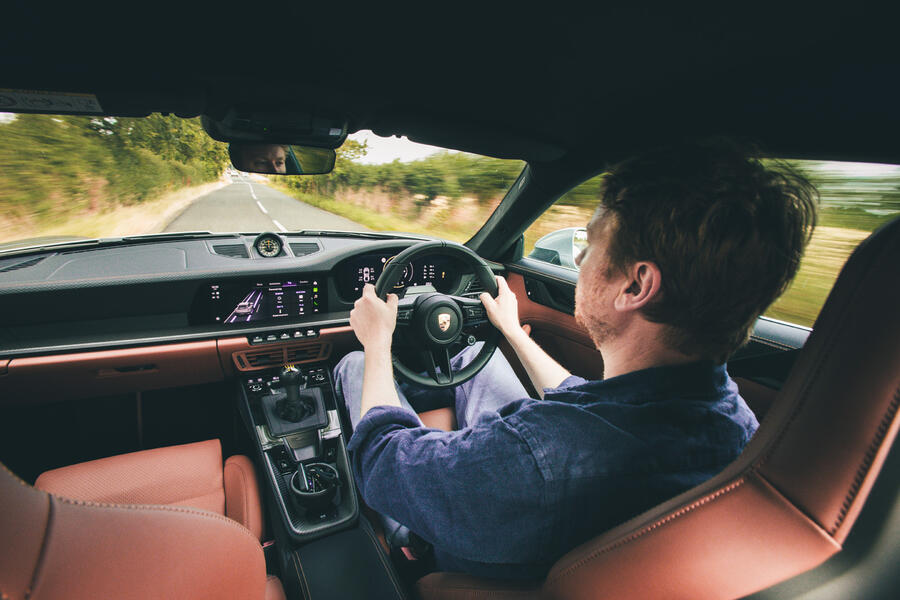
There is also, I hesitate to add, a lot of leather in this car. Even down to the sun visors, for pity's sake. I questioned the philosophy of throwing this much cow at a GT-division ware, but sliding aboard the finished article in one of Porsche Reading's handover bays confirmed it was the right choice. Even on a Pagani budget you'd struggle to blend such a classically charming cabin atmosphere with dynamics of the 992 GT3's high calibre. For daily use it's just an irresistible juxtaposition. Flawless ergonomics too.
Every bit as irresistible was the thought of pairing this engine with a six-speed manual gearbox. So, that is what this car has, rather than Porsche's doppelkupplungsgetriebe (PDK), devastatingly effective as the dual-clutcher is.
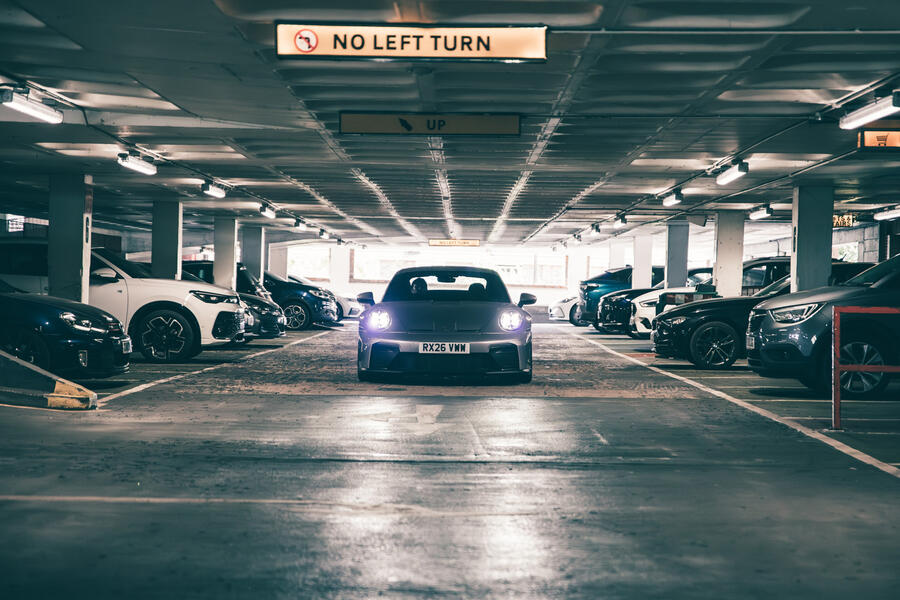
One easy decision was to give the Leichtbau pack a miss. This equivalent to the Weissach kit on the winged GT3 is deemed mandatory for the purists but the lightweight glass would hurt the touring manners. And frankly, the last thing I want to be worrying about in a Provençal hilltop village is dinging a magnesium-blend alloy. I can also live without the shorter gearlever throw of the 911 S/C. There's a place for a super-notchy throw in a GT3 Touring, just not this one. And neither is the Leichtbau, which saves you all of 22kg, compatible with the tasty Cohiba leather.
Total damage? Just shy of £200,000. And now the big question: with the right options, can you really ameliorate the tiring bits of this specialised car while preserving that delicious animal edge? Four weeks and 3000 miles with airport runs, a blast to the south of France, plus a thrashing at Donington Park and life in speed-bump-ridden London would provide the answer.
So, sliding aboard for the first time, I sighed at the inevitable sight of the bulging new driver-awareness monitor but grinned at the strip of carbonfibre bonnet underbelly that's just about visible over a GT3's scuttle. I also noticed the odometer at 1000 miles. Some kindly press officer had run the motor in beforehand. No doubt they obediently stuck below 7000rpm for 932 miles, as the manual advises, while avoiding big gears with low crank speeds.
With only four weeks to enjoy the car, I was grateful but also sad. Bearing sensory witness as a driveline like this beds in is the ultimate act of deferred gratification. The drive home along the M4 and around the North Circular cemented the feeling that, whatever niggles bubbled up around the periphery, this car was not going to be exhausting company.
For a start the GT3 has a forgiving clutch but not an imprecise one. The car is a hell of a lot easier to nose along in traffic than an S/T, which has the single-mass flywheel weighing about half what its counterpart in the GT3 does. If anything, the GT3's clutch is a touch light for my liking. The same is true for the gearshift, which is smooth and remarkably free of play but lacks the sinuous heft of older GT3s.
One thing these most recent manual GT3s do borrow from the chattery S/T is the final drive. It drops the redline in second from what was 81mph to 74mph. This is undeniably handy if you enjoy hearing the engine spin to 9000rpm as much as you enjoy having a driving licence.
That said, I'd argue that 5000rpm matters more. This is when the 503bhp flat six comes on cam, the intake starts rocking and the plainclothes GT3 Touring starts to feel very thoroughbred indeed.
That's the thing about this 4.0-litre engine. Yes, there are more catalytic converters than ever and as a result it doesn't sound as frighteningly raw as previous incarnations, but there's delight to be had in every portion of the rev range. It will pull fourth from the basement without even the hint of a hiccup. Lazy motorway overtakes in the 4000-6000rpm window flood the cabin with burly resonances. The final 1000rpm is still rampant.
Other 911s are faster—much, much faster these days—but none is anywhere near as interesting to interact with at any given moment as the GT3. This is truest of the manual car, in which you have total command of this atmospheric unit. And what staggering breadth. I dropped in at our road-test base to take some telemetry figures and the car rattled off 0-160mph in fifth. Outrageous.
Somewhat sheepishly I also weighed it. Result? Fully fuelled, our car was 1481kg, which I thought impressive for a GT3 whose lavishness borders on plutocratic excess. In fact, it's a mere 66kg more than the full-blown 997 RS we tested in 2010, and think how much extra kit you get in a modern car (the ballsy RS didn't even have air conditioning).
A starker comparison can be made with the current Carrera GTS. At £144k it undercuts the GT3's circa-£165k list by not a lot, and the two will be cross-shopped. When we tested a rear-drive GTS coupé in 2025, it weighed in at 1607kg, even with carbon-shelled buckets and no back seats. In 2026, the GT3 is a very light senior sports car.
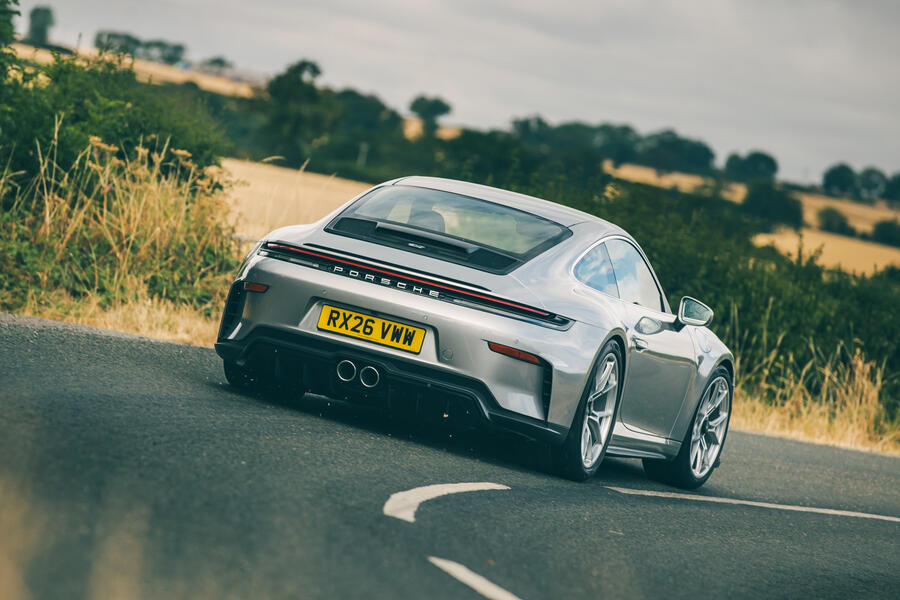
As the miles passed under its pretty wheels, it became obvious how effortlessly the GT3 distances itself from its range-mates both with powertrain and chassis. Which element contributes more to the car's overall specialness is a worthwhile debate, with no wrong answer. The intricacies of this engine need no more column inches: it's stunning. Having the manual 'box then allows the driveline to breathe; you set your own rhythm when you head off down a decent road. A whipcrack between gates or that sleepy first shift into second at the start of the commute. You are so connected to the machine.
Equally, for my eight-year-old nephew, for whom this understated, friendly-seeming little Porsche offered a first taste of real performance, it was probably the chassis that left a mark, but he wouldn't have thought of it in those terms. He was too busy having his mind blown by arguably the greatest sports car of its era in full, wailing flight down a Warwickshire B-road: explosive, intimidating, impossibly swift and resolute.
In these situations, the engine is of course more superficially prominent. However, the grip and damping are more extraordinary once you begin to appreciate it. Older GT3s could tramline and squirm but the 992.2 is absurdly composed, to the point you wonder what the hell you'd do to get it misbehaving. These new cars key into the road and laugh off adverse cambers and wicked troughs — and the engine's efforts, it often seems.
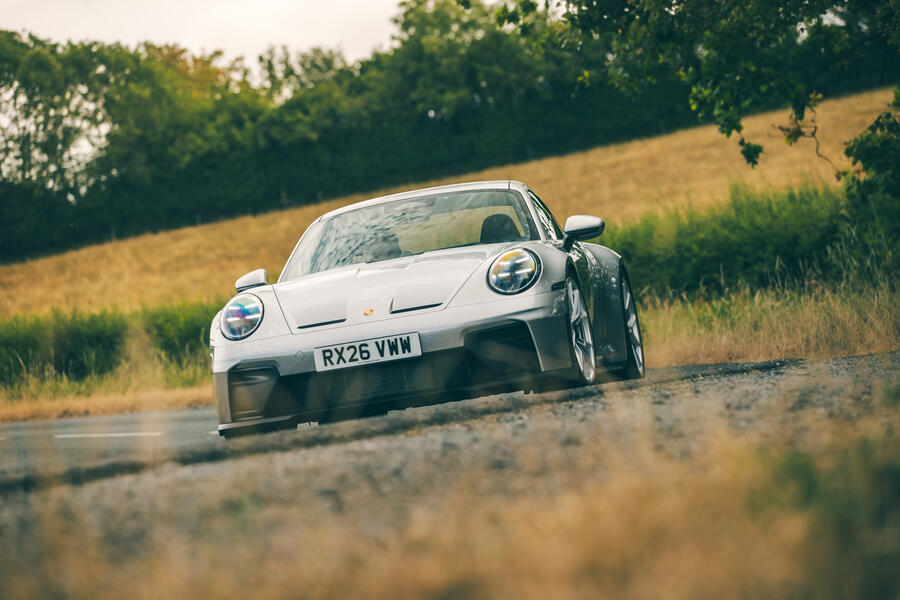
I'll explain. Porsche has for years had to peg the GT3's output at around 500bhp, and in fact for this latest version torque has fallen slightly, from 347lb ft to 332lb ft on account of new emissions hardware. Meanwhile the chassis has continued to evolve: more grip, a more consistent contact patch, better compliance on the road (especially with the 992.2's subtly revised damper rates).
It's a trajectory that was thrown into relief on the Col de l'Espigoulier — a stunning, easily accessible pass not far from Paul Ricard circuit with varied parabolas and a few juicy straights among the scree and the garrigue. Deathly quiet on a weekday morning too, bar the odd cyclist.
On roads like this, you can really lose yourself in the GT3's accuracy and agility, which exists at a level beyond almost anything else you might compare it to. Even in a specification like this car's and with Porsche's recent softening of the steering response, there's an underlying intensity and transparency that makes something even as silly as a Ferrari 296 Speciale feel synthetic.
Alas, where the Ferrari, and plenty of other turbocharged alternatives, get the better of the GT3 is in childish exuberance. Unless you really get the tail moving early on entry with the brakes (no mean feat on the road), it can be difficult to rotate the Porsche all the way through corners.
Some fag-packet calculations show that, at a mid-corner-ish 45mph in second gear, the 911 GTS is making 20% more torque than the manual GT3. It's also putting it through narrower tyres. The PDK-equipped GT3, with its closer ratios, splits the difference. But the fact is that, in the manual car, the engine can struggle to get on top of the chassis unless you go full François Delecour (or are prepared to drop to first gear in hairpins).
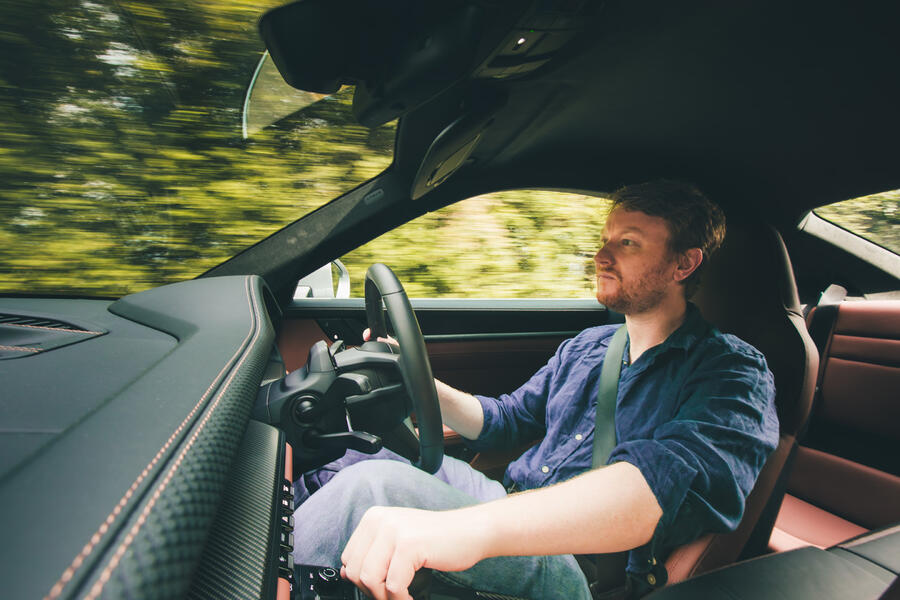
It's an equation that flips when those nostrils get a sniff of a circuit. I won't dwell on this aspect because we all know how good a GT3 is on track, but an evening spent at Donington confirmed it. Turn up, screw in your towing eye, destroy nearly everything else in attendance, then head home with the car feeling not even 1% less tight than it did beforehand. Only some gently glazed pads gave the game away. These cars are astonishingly tough as track-day toys. With high g-loadings, the chassis also comes fully to life and is at its balletic, adjustable best.
While I wouldn't say no to the lower hip-point, I didn't even miss the bucket seats much. I was too busy enjoying what at a glance passes for a basic Carrera but feels like a homologation special. Which of course is what the 911 GT3 is.
The Paul Ricard trip was my most meaningful activity, given the car has 'Touring' in its name. It duly threw up some pertinent findings.
Firstly, this car's ride quality is excellent. I maintain that French and German 911 GT3 owners have a very different experience from British ones because our motorways are surfaced in a way that makes them horrendously loud in any racy 911. But in terms of pure ride, the 992.2 Touring exhibits an amazing lack of prickliness. If you'd like it any softer, it's not a GT3 you want.
That said, making progress on the autoroutes means 3500-4000rpm in top. That quickly gets attritional for both wallet and ears.
The PDK would drop the crank a useful 500rpm or so. But the fact is that while it's possible to coax nearly 40mpg from a Carrera S at a cruise, this 4.0-litre unit is just a thirstier beast. Economy in the low-to mid-20s is the reality. With a 64-litre tank, that equates to a touring range of 300 miles. Not terrible, but enough to make you wish right-hookers got the 90-litre tank offered to left-hand-drive cars.
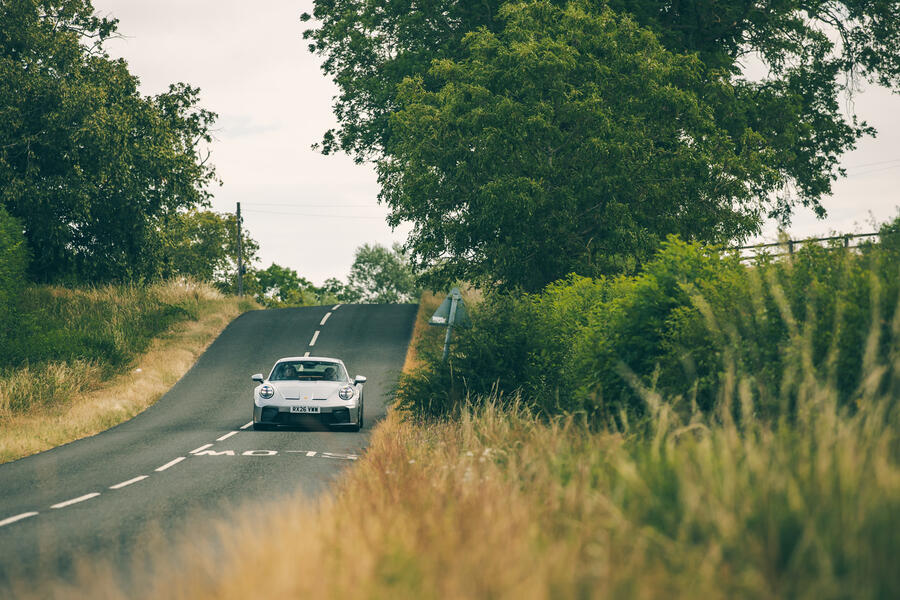
While we're at the more prosaic end of the GT3 question, with the radiators directly ahead of it, the frunk gets shockingly warm on a long run, particularly in the kind of summer we've had. My Fuji camera body was almost too hot to touch after a run from Lyon to Marseille. I'm fairly sure you could actually bake a camembert in there.
Elsewhere, the ADAS are hands-off, although Porsche must do something about that driver monitor, which is omnipresent and saps some of the GT3's analogue vibe. That the useful damper mode toggle on the dash has been replaced by an ADAS shortcut also irks.
You now have to make the change via the digital instrument binnacle, though Sport and Track can be pre-configured, so changing the character of the car needs only a quick swivel of the wheel-mounted mode dial.
As for the rev-matching programme, it's a bit of a godsend. No, I'm not afraid to say it. If you do want to heel-and-toe, you'll find the pedals carefully positioned, and on the Col it was joyful. But in the daily grind it's a different story and I was glad to be able toggle the system quickly via the screen. My only issue is that during a more languid upshift, the computer will still try to maintain revs, so you can get an odd moment when the revs flare. It's a niche complaint, I will admit. And now we get to the end of the story.
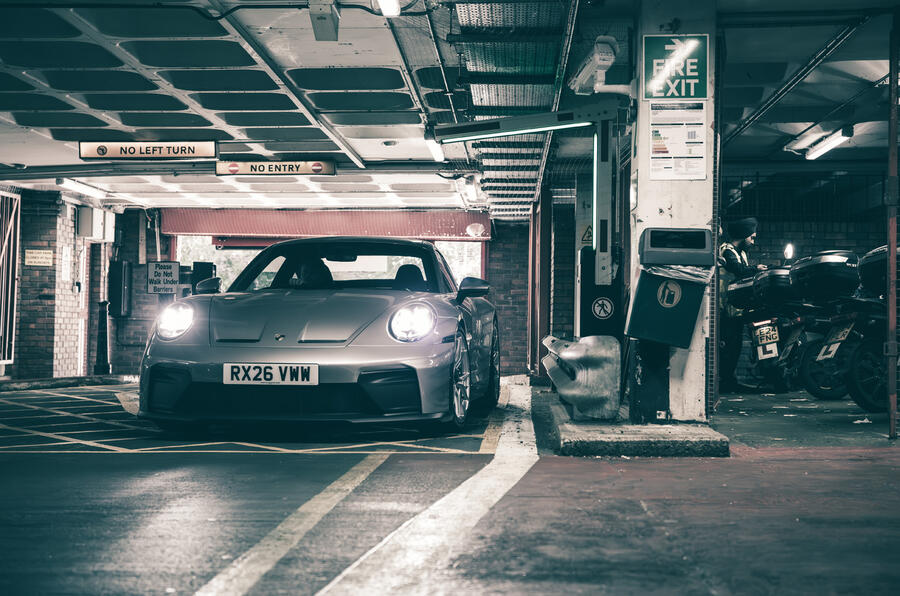
Is the magic of the GT3 discernible in everyday driving? Completely. These cars are just so much keener and lighter on their toes than any other 911s. You notice it constantly. Over time 911s have grown in size and refinement and most of them now feel more GT than sports car.
But not the GT3, even in such a lavish specification. The focus is there even in those few turns of the wheel after a cold start on a weekday morning.
Does it ever wear thin? Honestly, for touring duties I'd consider the PDK. Yeah, heresy, but hey. The manual 'box is a beauty, but there's enough fire and depth in the engine and chassis to suggest you might not miss the extra layer of engagement much. You'd also settle the crank at cruising speeds and at that point, with its ride quality and generous luggage space, a GT3 like this one is barely more taxing than a Carrera S.
And yet underneath all that good sense, and the unshowy body you'll happily park anywhere without worry, sits the steely core. You can dial it down but, gloriously, you can never dial it out.
Popular Products
No popular products available in this category.