Is A Hydraulic Roller Cam Really Worth It?
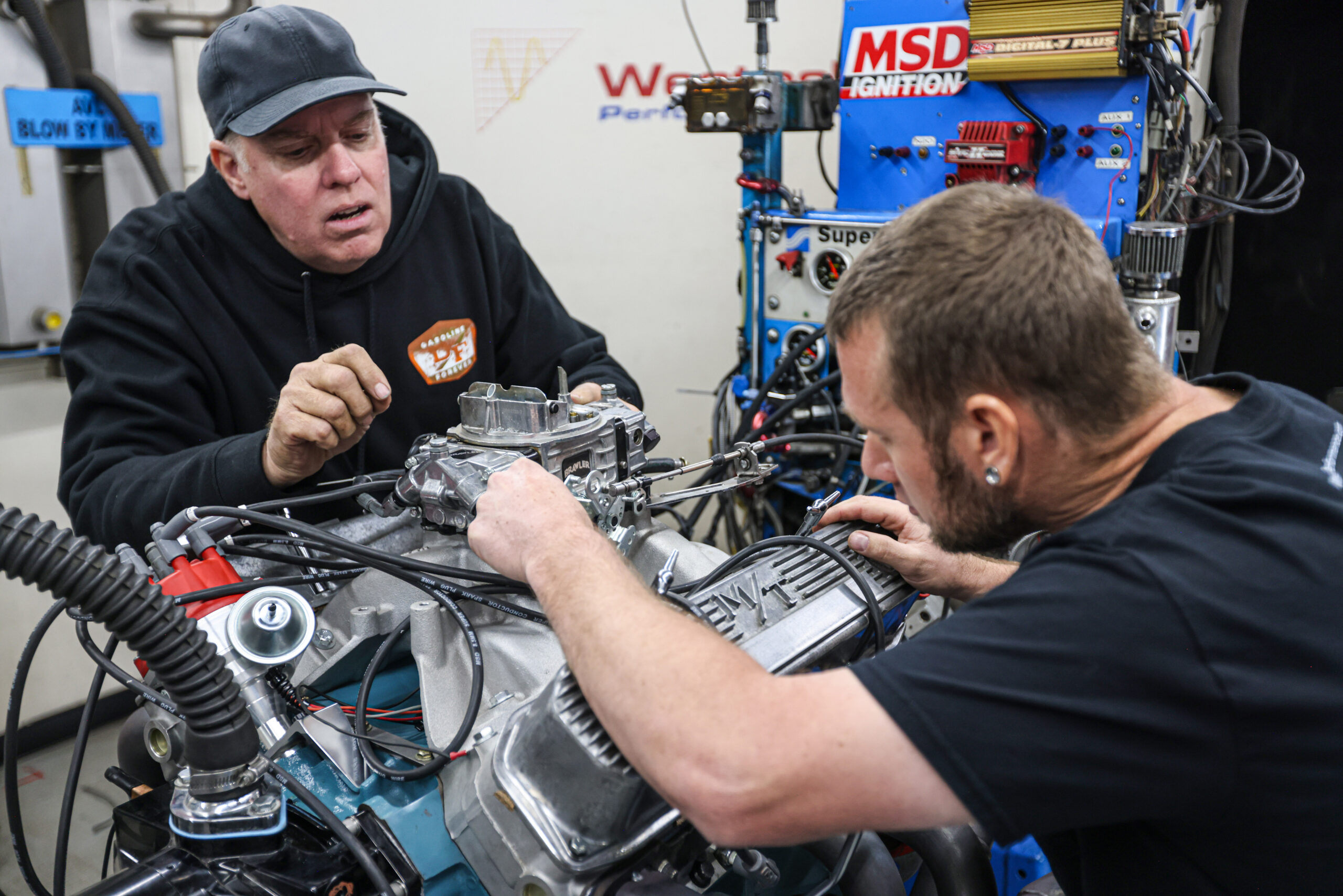
We recently visited Westech Performance in Jurupa Valley, California, to witness friend and automotive media personality David Freiburger dyno-test his latest project motor. Finding the right cam has been a process, and for this round, Freiburger switched to a hydraulic roller cam. These are not cheap parts; did the move pay off?
First, some context. Freiburger purchased this Mopar 383 V-8 as a fresh rebuild with a plan of installing it in his 1970 Plymouth Duster. After taking it apart and checking things out, he decided it needed a camshaft with less duration to maintain safe piston-to-valve clearance. He found a suitable cam with 216/228 degrees of duration at .050” valve lift, .454/.480 inches of total lift, and 112 degrees of lobe separation.
Earlier this week, we covered a bit of the process that David went through to get his engine ready to run. At that time, the engine produced a respectable 445.5 lb-ft of torque at 3500 rpm and 396.1 hp at 5400 rpm, but the 440 Source aluminum cylinder heads held more potential. With the engine’s flat-top pistons taking a whole lot of longer-duration camshafts off the menu, Freiburger decided to install a roller camshaft and see if the 383 could be a little more impressive.
More Auto stories