Explaining The Ugly Battle For Right-to-repair Laws

While right-to-repair legislation has been cropping up across the United States in recent years, only a handful of regions actually have enshrined those proposals into law. Perhaps more vexing is the fact that the laws don’t seem to be yielding much tangible progress. The industry continues trying to prevent changes as their lobbying efforts continue. However, this has not prevented fresh states from considering right-to-repair.
In 2012, Massachusetts became the first state to pass a right-to-repair law via a ballot measure that required automakers to provide independent repair shops access to the same diagnostic tools and information as sanctioned dealer networks. The proposal was floated as a way to protect independent businesses, prevent monopolization, and provide individual drivers with options about how their vehicles and personal data were dealt with.
Sadly, the industry has offered nothing but pushback ever since. Lobbying efforts against right-to-repair have exploded and minimal effort was made by manufacturers to adhere to the updated rules. This led to Massachusetts supporting a 2020 ballot initiative to require automakers to offer standardized diagnostic equipment for all 2022 model year vehicles.
This turned into a lawsuit ( Alliance for Automotive Innovation v. Healy) where the automotive lobby argued providing open access would endanger the private data of their customers and lead to potential hacking dangers. Tragically, the National Highway Traffic Safety Administration (NHTSA) took a lukewarm stance on the case by suggesting that the law could pose cyber security risks and may even violate federal safety regulations. It suggested a compromise. However, a federal judge dismissed the challenges in 2025 — allowing the updated right-to-repair rules to progress in Massachusetts.
While it took over a decade, the state has since been joined by New York, Colorado, California, Texas, Minnesota, Oregon, and Washington in passing similar consumer protection laws. But the rules often target different industries, resulting in minimal changes at the national level.
The excuses are always the same. Companies will insist that giving third-party access to data poses a severe cyber security risk to both themselves and the customers. Lobbyists likewise insist that simply building standardized diagnostic tools for the masses would bankrupt them. This is followed by claims that simply allowing modern vehicles to be handled by someone other than branded service centers could lead to improper repairs — potentially resulting in increased emissions, legal liabilities, breakdowns, and anything else they need to say to scare you.
This all patently ridiculous because it’s the automakers themselves that are harvesting the allegedly sensitive data to begin with, often with the intent to sell it to third-party companies for profit. What they’re really upset about is being legally obligated to give control of where this valuable data goes.
Similar claims were argued when ECUs came into play. But customers and independent repair groups still fought until On-Board Diagnostics (OBD/OBDII) ports became standard equipment in the early 1990s.
It seems we are back where we started.
Lobbying efforts against right-to-repair have continued, with Maine becoming the current battlefront. In 2024, the state passed new rules mimicking what Massachusetts already had on the books. However, corporate lobbyists spared no expense to influence legislators to make changes that favored the industry. This was followed by the Alliance for Automotive Innovation (the largest auto lobby in the world) launching a lawsuit against Maine’s Attorney General, Aaron Frey.
“This is an example of putting the cart before the horse,” stated the lobbying group. “Before automakers can comply, the law requires the attorney general to first establish an ‘independent entity’ to securely administer access to vehicle data. The independent entity hasn’t been established. That’s not in dispute. Compliance with the law right now is not possible.”
Manufacturers basically did the same thing in Massachusetts four years earlier.
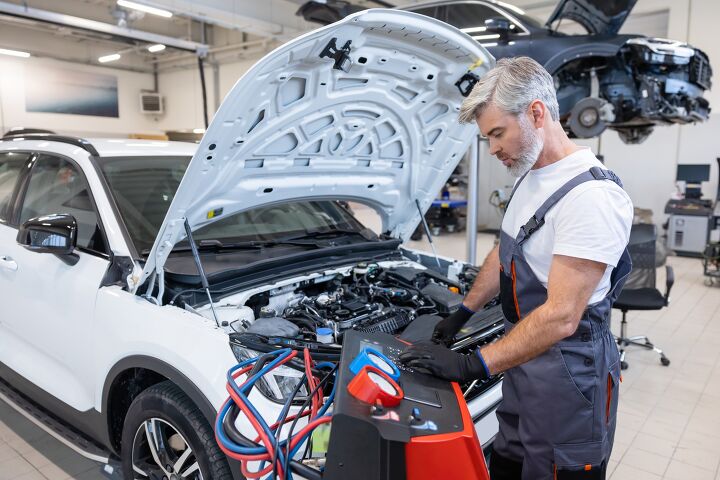
It’s typical for lobbying groups to try and stall these rules by any means necessary. While the relevant law may be on the books in Maine, nobody is really enforcing it and automakers are effectively saying they cannot comply until all the details are ironed out. This would be fine if they were good-faith actors.
However, the reality is that a great deal of lobbying efforts go into muddying the language used in right-to-repair laws as they’re being dialed in. Automakers say that they cannot comply until every single detail is ironied out and the government is prepared for enforcement. But this is happening as they’re also doing whatever they can to sway legislators to modify the rules in a way that benefits manufacturers.
This month, the battle continued in Maine. Governor Janet Mills vetoed LD 1228, known as "An Act to Clarify Certain Terms in and to Make Other Changes to the Automotive Right to Repair Laws." The legislation was created by an Automotive Right to Repair Working Group to solidify the state’s pre-existing right-to-repair laws.
Here’s where things get tricky, a fair bit of the media framed this move as the governor coming out against right-to-repair. However, she claimed that her decision hinged on a single provision in LD 1288 (advanced by manufacturers) that would give them authority over how telemetric data would be made accessible to independent automotive repair shops.
While Mills stated that she supported a majority of what was in the bill, that single provision resulted in hundreds of independent repair shops asking her for a veto. A single inclusion, made to appease the automotive lobby, had effectively tainted the entirety of the legislation.
"This provision — which was notably not included in the Working Group's unanimous recommendations — was included at the urging of automobile manufacturers. However, without timely access to vehicle data, independent auto shops are left at a significant competitive disadvantage, and consumers would have fewer choices for automotive service and repair," Mills explained in her veto letter. "With this provision included, LD 1228 would undermine the existing law overwhelmingly approved by Maine voters and harm independent repair shops across the state."
"As enacted, LD 1228 is a finger on the scale in favor of auto manufacturers and against local businesses and the will of Maine voters, and I cannot support it.”
The Maine House of Representatives, reportedly under pressure from the automotive industry, over-rode Mills’ veto. TechDirt even noted that corporate lobbyists had used scare tactics to convince representatives that right-to-repair laws create severe security risks — going so far as to allege that loose data could mean some motorists would be stalked and assaulted.
This has actually become another commonly used tactic by lobbyists to bully legislators in compliance or frame them as insensitive should they go against the grain.
While the state’s Senate ended up voting to uphold the veto, it’s hard to see any of the above as a victory. Automakers continue to allege that they cannot comply with right-to-repair rules without clarifying language. But Maine’s attempt to do just that was effectively nullified. The industry added language to the clarifying rules, encouraging Governor Mills to scrap the whole thing.
Realistically, it’s hard to envision a situation where a few states pinning down right-to-repair laws and the requisite enforcement protocols actually results in meaningful changes. In order to force automakers to comply, something likely needs to take place at the federal level. However, the amount of lobbying that takes place between states is totally eclipsed by what happens in Washington D.C.
As much as we’d all like to see the industry continue building cars without unnecessary headwinds, we have to be honest about what’s taking place right now. Manufacturers are attempting to monopolize the private data of their customers and are enjoying staggering levels of success thanks to their lobbying efforts. But this goes beyond data harvesting, as the resulting technology is poised to make it impossible for independent repair shops (and private owners) to work on the vehicles being built today.
At this point, the whole thing feels like an anti-trust issue. But it’s been some time since we’ve seen the government take meaningful action against monopolization that wasn’t settled via lofty fines. That seems to suggest breaking those laws is acceptable, provided the end result is profitable enough to cover the financial penalties. Meanwhile, we’re seeing a lack of competition in the relevant industries (keep in mind that right-to-repair encompasses more than just automobiles) and some of the most predatory business practices in all of human history.
It's an admittedly bleak situation that's poised to exterminate independent mechanics and prevent at-home repairs. Fortunately, it comes with a silver lining. Studies have repeatedly shown that a majority of Americans support right-to-repair legislation and are growing aware of industry data harvesting. It seems likely that their ranks will only swell as repair expenses continue to grow and independent work becomes more troublesome without the necessary diagnostic hardware that's being withheld by the industry.

[Images: Setta Sornnoi/Shutterstock; Dmytro Zinkevych/Shutterstock; Standret/Shutterstock]
Become a TTAC insider. Get the latest news, features, TTAC takes, and everything else that gets to the truth about cars first by subscribing to our newsletter.
Popular Products
No popular products available in this category.