American Honda Collection Hall -- Ultimate Museum Private Tour
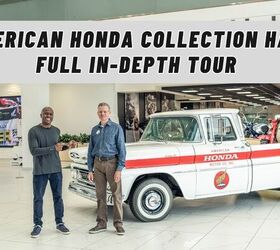
The American Honda Collection Hall is the official U.S. museum of Honda & Acura products.
Drive Culture received a private 1-on-1 tour of this incredible display by the head of Heritage Public Relations, Carl Pulley.
This is a VERY detailed walk-through and the longest video we’ve ever published, but we’ve broken it down into Chapters, so feel free to watch the whole thing or skip to your favorite section.
Also check out Drive Culture on YouTube. Drive Culture is detailed car review YouTube channel hosted by the ultimate car enthusiast, Jonathon Rivers.
Who is Jonathon Rivers?
Well, he's a +15 year Auto Industry veteran, born and raised in the Motor City!
He lived several years in Japan, speaks & reads Japanese, and now works for American Honda Motor. (Although this channel is his own & not affiliated)
He's owned several fun cars including a Evo IV, multiple Civic Si, Focus RS, and most recently the Integra Type S (which he lead planning for Acura)!
He's also been lucky enough to drive just about every key new product in the market from compact cars, to SUVs, EVs and super cars!
If that isn't enough to prove his "car guy" status, Jonathon has also been featured in Motor Trend, Car and Driver, AutoBlog, Jay Leno's Garage, Raiti's Rides and the SavageGeese channels! He's on Instagram here and Facebook here.
Check back every Friday at 7 am Pacific Time for new content and videos!
The TTAC Creators Series tells stories and amplifies creators from all corners of the car world, including culture, dealerships, collections, modified builds and more.
A transcript, cleaned up by AI and edited by a staffer, is below.
[Image: YouTube Screenshot]
Become a TTAC insider. Get the latest news, features, TTAC takes, and everything else that gets to the truth about cars first by subscribing to our newsletter.
Transcript:
????️ Welcome to Drive Culture: The American Honda Collection Hall
(Jonathan Rivers): Welcome to Drive Culture. I'm Jonathan Rivers, and today we're at the American Honda Collection Hall. I'm going to get a private tour of this museum at the US headquarters of Honda and Acura. If this is content you're after or you're new to the channel, please be sure to click that bell to subscribe to come back for more. With that, let's get after it.
I'm lucky enough to get a private tour of this awesome museum. First and foremost, let me welcome my special guest, Carl Pulley, onto camera.
(Carl Pulley): Hey, Jonathan. Thank you so much. Seriously, you are doing us a huge favor here. I know our audience wants to learn a lot about all the amazing products that are here on display.
(Jonathan Rivers): Tell us what your job is. How did you take over this whole museum responsibility?
(Carl Pulley): I've been with Honda for 23 years, and I feel absolutely blessed now to be running the Heritage PR department. That includes this beautiful American Honda Collection Hall and all the events that we put on, including our Cars, Bikes, and Coffee events that we have every other month. They've been getting up to 3,000 people now.
(Jonathan Rivers): What's crazy is, for those that have been following our channel, they've seen a very small snippet of what one of those events is like. We did it when we had the big Acura Grand Prix of Long Beach event. If you haven't watched that video, please be sure to watch that. Tell us some more. Is that something that people can just come in and experience, or when do these events happen?
(Carl Pulley): This place is open during regular work hours during the week, so if you happen to find yourself in beautiful Torrance, California, you can just walk in. It’s designed to be self-guided.
We wanted to create a dedicated event for enthusiasts, so I love the idea of Cars and Coffee. Enthusiasts bring their own cool cars. Obviously, Honda is a motorcycle company as well, so that's why it's the Cars, Bikes, and Coffee. I wanted to have that element where enthusiasts come together, they bring their own cool cars and cool bikes because you never know what you're going to see.
Ours is almost like a full-blown show because not only do we open this space up for people to see the Collection Hall, but we have special exhibitors, food trucks, vendors, giveaways, and a DJ. It's a really wonderful event, and it's open for three hours, from 9:00 AM until 12:00 PM. However, don't let anybody know this, but we open up the gate at 7:30 AM so those true enthusiasts that have the really, really cool cars—just like you and your beautiful Integra Type S—can come early and get those prime spots.
(Jonathan Rivers): We're going to come back and do more of those videos, so let us know down in the comments below: Do you want to see more of the Cars, Bikes, and Coffee? We're happy to bring it to you. But today, we're going to go through this Collection Hall. Why don't we get started? This is your show. I'm going to ask some questions along the way, but why don't you give us this private tour?
????️ The American Honda Collection Hall Tour
(Carl Pulley): Absolutely. We're starting off in our main lobby area. The Collection Hall covers about 20,000 square feet. This is our main lobby where people come in for business purposes, for visiting vendors, and so forth.
The whole idea of the Collection Hall is that it's about our past, our present, and our future. We have over 60 products here that really represent our over 60 years of helping Americans in their play and in their work and their everyday lives, whether it's motorcycles, cars, or our power equipment.
In this area, we change out the displays most rapidly. Here you see we have a selection of Baja and off-road racing motorcycles. We actually had a media event with social media influencers where they rode adventure touring bikes from Seattle, Washington, all the way down to Newport Beach in Southern California. They did on- and off-road riding, about 2,000 miles over 10 days, and they arrived here as the finish line of that event.
We've got a lot of these off-road Baja racing motorcycles to represent, and as you saw earlier, we have a 1961 Chevy Apache with a couple of bikes in the back. We'll talk about the significance of that truck and those bikes when we get into the very earliest beginnings.
(Jonathan Rivers): I'm going to jump in because people are going to say, "Oh, well, you should let Jonathan ride these bikes." Guys, I'm sorry, I don't know how to ride, especially a dirt bike, so that's not going to happen on this channel. But that's really cool that you actually let influencers and people partake in that event. How did you even set that up?
(Carl Pulley): It was part of our motorcycle division, which we call Sports, and so it's a wonderful way to showcase the way in which we can use our bikes and our cars. Mr. Honda had a philosophy to make technology serve people. We design, and fundamentally, we're an engineering company, and we go to great lengths to create new value with all of the products.
Sometimes it's creating a whole new type of product, and other times it's just creating an enhancement that no one else has thought about. You really get to showcase that, especially through the media when you get to ride. It was the Africa Twin and the Transalp, two adventure touring bikes designed for long distances but also off-road. That's why they took them 2,000 miles instead of 1,500 miles because they went off the beaten path, literally, and rode off-road.
The Collection Hall in general is a living, breathing collection, and many of the cars are drivable. I love to be able to provide members of the media, like you, John, with the opportunity to drive. Maybe if you twist your arm a little bit, we can get you one of these vintage vehicles.
(Jonathan Rivers): You guys heard that first, but you got to see what's in this Collection Hall before you get to decide what I'm going to take out of here. Tell us more, what are we looking at here now?
???????? Honda's Humble Beginnings: The Pico Room
(Carl Pulley): We're actually going to be going into the special room which is called the Pico Room. The reason why we call it the Pico Room is that our very first headquarters in Los Angeles in 1959 was 4077 West Pico Boulevard in Los Angeles.
If you turn around, you'll see a mural of our very first headquarters, which is very, very humble indeed.
(Jonathan Rivers): It looks like the size of a bicycle shop, right? Absolutely! But that's so cool that that's how Honda got started in the US, right?
(Carl Pulley): Absolutely. We only had six employees to start.
Let me back up a little bit to give you the perspective of Honda, obviously a Japanese-founded company, coming to the US. In 1948, Soichiro Honda founded Honda Motor Company in Japan. He was a self-taught engineer and somewhat of a philosopher who wanted to use technology to help people. The original product was the motor in that he took World War II surplus engines and figured out a way to mount them onto bicycles to give post-World War II Japanese people the opportunity to have motorized transportation.
From that very humble beginning, within 10 years, Honda was the best-selling motorcycle brand in Japan.
(Jonathan Rivers): That's crazy. I've also heard a rumor that not only was he trying to make everyone's lives better, he was actually trying to please his wife, and he used that engine on her bicycle to let her get into town. Is that true?
(Carl Pulley): Absolutely, that is a thing. From that personal perspective of wanting to assist his wife in getting motorized transportation, and thinking broadly about the community around him. Soichiro Honda was somewhat of a rebel. He really kind of thought out of the box.
He told associates that we should dream. He meant to use your creativity and dream about new ways that you can enhance what you do personally, but also how could we enhance our products to provide new value to our customers.
He was the inspiration and the engineering genius behind it, but Takeo Fujisawa, who joined as the second founder a year later, was the business brain behind Honda. Soichiro Honda said, "Without Fujisawa-san, there would probably be no Honda," because he really kept the business side going.
(Jonathan Rivers): Everybody knows Mr. Honda; his name is the company. But like you said, Fujisawa-san played a crazy critical role in getting the company started and being that business guy that probably kept Mr. Honda in check on some of these projects. We've got these bikes here on display. Are these the first bikes?
(Carl Pulley): Kind of going back and tying that into Fujisawa-san: After 10 years, Honda is the best-selling motorcycle brand in Japan, so they said, "We need to expand and go further." Fujisawa-san said, "We're going to go to America, because if we can make it in America, we can make it anywhere."
From the humble beginnings in 1959, we only sold three bikes: the Super Cub, the Dream, and the Benly. They were 50cc to 125cc engined motorcycles, but they were incredibly reliable, clean, and very fuel efficient. This Super Cub got 170 miles per gallon, and by the way, this is history's best-selling mobility product because we've sold 100 million of these Super Cubs worldwide, and we're still selling them.
Referencing back that Chevy Apache, we didn't have cars at the time, so we needed delivery vehicles. We bought a fleet of Chevy Apaches with that livery on it. We would take these motorcycles to sporting good stores and department stores like Sears and Roebuck and display them under consignment.
Within 10 years, guess what happened? Honda was the best-selling motorcycle brand in the US. One of the main reasons behind that is that we created a whole new market. Honda's marketing agency came up with the concept of "You meet the nicest people on a Honda." It was such a successful marketing campaign that it created a new market for these small, fuel-efficient motorcycles. The ad campaign showed people from all walks of life enjoying these motorcycles and helping them in their everyday lives.
????️ Motorcycle Evolution
(Carl Pulley): From these very humble motorcycles, by the mid-'60s, we started to come out with bikes that enthusiasts would really be interested in.
The Scrambler and Super Bike
One of them is this CL77 Scrambler. This is what we'd now call a dual-sport motorcycle, designed for road use but also off-road. These were selling like hotcakes, especially in the Western US where we have so much public land. With the slightly taller suspension and the high-rise exhaust, these things were incredibly reliable.
To showcase Honda's durability, two test engineers in the early '60s rode two of these down the tip of the Baja Peninsula in Mexico. That was the inspiration for what now is the Baja 1000 off-road race, which is still raced today.
This bike really set Honda as a true motorcycle company: the 1969 CB750. This is arguably what is considered the first Super Bike. It brought so much new value to customers because it was the first production bike with a front disc brake (far safer and more efficient), the first with overhead cams, and the first with an electric start. This bike is probably responsible for killing the British motorcycle industry.
Racing and Manufacturing
This is a full-blown off-road motorcycle, a motocross bike, the Elinor CR250. This is the very first one. Mr. Honda didn't really care for two-stroke engines, but back then, the Scandinavian brands were dominating in motocross racing. Honda was determined to beat them. His engineers made the best two-stroke engine ever produced, and this then dominated motocross circuits around the US.
The success of this motorcycle prompted Honda to make its first manufacturing plant outside of Japan in Marysville, Ohio, to produce a later generation of the Elinor. The success of building motorcycles in the US led a couple of years later to us starting to produce the Accord in Marysville, Ohio.
(Jonathan Rivers): It's such a crazy story. At its core, Mr. Honda was about proving that in bike racing, F1 racing, any kind of race he wanted to join, he wanted to win. That drive, that ethos, and this mindset that anybody can do it no matter how small of a player you are, is something I've always respected about him.
(Carl Pulley): Famously, Mr. Honda said, "If Honda didn't race, there would be no Honda." You learn so much development, and it really enhances the products, just like I mentioned with the CB750. Disc brakes first came into the racing scene, and then Honda was the first one to bring it into production.
Mobility and Touring
(Carl Pulley): With our ethos of creating new value for customers, sometimes that means that we actually create new mobility products that no one has ever created before. This is the ATC (All-Terrain Cycle). It's an off-road motorcycle, not designed for the road, but it gives off-road mobility to people that might be challenged with the balance aspect of a motorcycle. I love James Bond, and in Diamonds Are Forever in 1970, they had dozens of these.
(Jonathan Rivers): Like you said, it's a three-wheeler. Did this help with creating the ATV segment?
(Carl Pulley): Absolutely. This led to the development of the ATV (All-Terrain Vehicle) that has four wheels, giving you that stability. Honda created the ATV.
This is the first Gold Wing, the GL 1000. This was a bike that was really designed for America. America has always been the place where we've got these big long highways and freeways, and so there's a lot of ground to cover. This was specifically designed for the American market, in a 1,000cc flat-four engine. Later iterations have an 1,800cc engine and fairings and luggage.
We have this little Honda Express just to remind people that even though we became an enthusiast motorcycle brand, we didn't forget about the people that still use motorcycles for everyday transportation, specifically Southeast Asia and China.
This beauty, the CBX, you really only get to appreciate when you look from the front. This is the first Honda bike that made over 100 horsepower, and it's powered by an inline six-cylinder engine, which is absolutely massive. When this was introduced, it was bigger than most car engines.
This is the 1983 VF750. A journalist of the era said that engine development had overpassed chassis development, and the bikes of the era handled like a wheelbarrow full of mercury. This was the first bike that had an aluminum perimeter flight frame, so it out-handled every other sport bike on the market.
This is a homologation special, the RC30. This is probably one of the most beautiful bikes. It's a V4 racing motorcycle.
This beauty really speaks to Honda's engineering prowess and Mr. Honda's rebellious attitude. The sanctioning body said a racing motorcycle had to be a 750cc engine and could have no more than four cylinders. Mr. Honda wanted to make a V8, and they said no. So, he put two pistons together to form an oval and made a V4 with oval pistons, two connecting rods per piston, eight valves per cylinder, and two spark plugs per cylinder. It's an amazing feat of engineering.
The CBR and Modern Touring
(Carl Pulley): Then we move into the CBR. This is Honda's best-performing race bike over time for many decades. The CBR has dominated in production-based racing.
(Jonathan Rivers): Even I've heard of CBR. That tells you how well known it is.
(Carl Pulley): This is the CB 900 RR, which really introduced to the world the idea of power-to-weight ratio and mass centralization. The 1,000cc bikes this was competing against were 40 pounds heavier. The idea was to shrink-wrap everything, try to get all of the weight within the center of the motorcycle. Because it was so lightweight, even though it was 100cc less than its competitors, it outperformed them.
(Jonathan Rivers): People can get so enamored on the engine size or the horsepower, but if it's super heavy, that kind of takes away. Lightweighting and having a good power-to-weight ratio is more important.
(Carl Pulley): You think about the whole performance package. This bike is a World Super Bike Racing motorcycle, a Nicky Hayden replica. This is a V-twin 1,000cc. A unique Honda engineering idea: The challenge with a V-twin is that a cylinder is canted forward, which interferes with the steering geometry. To have really good handling, you had to have a fairly aggressive geometry. Honda's solution was to mount the radiator to the side, allowing the front wheel to be much closer to the engine to have that optimal steering geometry.
These last two bikes: The GL1800 is the previous generation of Goldwing. This is where we introduced the 1,800cc engine. This actually has a flat six-cylinder engine. It even has an available airbag in the front, the first and only airbag for a motorcycle.
(Jonathan Rivers): When you say only, no one else has it? That seems crazy but amazing.
(Carl Pulley): It also comes with a full communication system. The new one has Apple CarPlay/Android Auto, heated seats, heated hand grips, and vents.
This is the F6B based on that engine. It has the same 1,800cc Flat 6 engine. This was created for the US market. The American style is this long wheelbase, feet-forward riding position, great for cruising. It looks like the Judge Dredd bike. It looks so mean and cool. It was almost identical to the concept and was a very special edition.
???? Honda's Automotive History: Efficiency and Innovation
(Carl Pulley): We actually just recently changed out this whole row, which is our main row of cars, because we wanted to celebrate the Prologue and the ZDX that I mentioned earlier. We wanted to showcase Honda's history of electrified and fuel-efficient vehicles.
The Civic and the Accord
That starts with the very first generation of Civic. This is the CVCC (Compound Vortex Controlled Combustion) engine, which was by far the most fuel-efficient and cleanest-burning vehicle of the era. In the mid-'70s, with the Oil Embargo, domestic land yachts were getting 6–8 miles per gallon. This got over 40 miles per gallon, edging on 50 miles per gallon highway, because of this incredible technology.
This was the only car that could beat those first EPA emission standards without the use of a heavy and expensive catalytic converter.
(Jonathan Rivers): I've heard stories that other companies didn't believe that was possible. The fact that Honda was able to pull it off speaks a lot to the engineering prowess.
(Carl Pulley): One of the phrases that Mr. Honda mentioned is that when governments come up with new regulations for vehicles, Honda hires 50 engineers; the other brands hire 50 attorneys. He had a competitor's vehicle shipped to Japan and created a CVCC engine out of it to prove it could be done.
The Civic really was the car that set Honda in the US as a car brand.
Americans wanted slightly larger, so that's really when the first generation of Accord came out. People wanted a little bit more room, a little more refinement, and some creature comforts. The first-generation Accord was the first car available in America with one key that operated the doors, the fuel cap, and the ignition.
(Jonathan Rivers): Wait, before that, this was the first car to do that? Learn something new, guys!
(Carl Pulley): Most of these vehicles have the patina of use, which I love because cars were built and designed to be driven. Some of them were pre-production units, but many of them were cars that people bought from new, took good care of them, and then we ended up buying them. Talking about mileage, we do have an Accord that has one million miles.
(Jonathan Rivers): That just seems amazing that with some basic upkeep and maintenance, these cars will run forever.
Alternative Fuels and Electrification
(Carl Pulley): We started to move into alternative fuels. This is the 1997 EV Plus. It was designed specifically to be powered by an electric battery and motor. We only produced 300 of these that were leased so we could take them back and learn from that experience. It was also to stimulate the infrastructure for electric vehicles.
These are based on the same platform, but this is the first hydrogen fuel cell.
(Jonathan Rivers): The EV Plus was '97, and this FCX says 2003, and it's hydrogen.
(Carl Pulley): Hydrogen creates power through a chemical reaction where you take atmospheric air through a fuel stack that creates electricity. The only exhaust is pure water. This one was the first hydrogen fuel cell leased to a commercial entity, the City of Los Angeles.
This 2006 Insight was the first hybrid sold in the US, and it was the Honda. It's very aerodynamic and was aluminum-bodied. The first one got 70 miles per gallon.
(Jonathan Rivers): 70 MPG! That was a crazy amount of fuel efficiency.
(Carl Pulley): This is the FCX Clarity, the next generation of hydrogen fuel cell. We learned a lot more about refining that fuel cell and efficiency. All the alternative fuel vehicles so far were built around the powertrain.
This is where we did the opposite. The Fit was a good-selling subcompact. The State of California wanted more EVs, so our engineers shoehorned an electric powertrain inside an existing model.
These two burgundy vehicles: The Clarity Fuel Cell is when we compressed the fuel cell even more. This one is a very roomy five-seater midsize sedan, and not only were we able to design the fuel cell and the drive motors under the hood, but it was also available with a battery electric and a hybrid. You had one model where you could choose three different electrified powertrains.
Modern Hybrids
(Carl Pulley): We're coming into the modern era. This is the current generation of the Accord Hybrid. Honda's goal is to be carbon neutral by 2050 and 100% electrified (BEV or hydrogen) by 2040.
We wanted to increase the adoption of our hybrids. The hybrids for both this Accord and the CRV (our best-selling vehicle, selling up to 350,000 units retail) are the best powertrain for these two models. They're the most powerful, refined, and quiet, and having an electric motor gives you that instantaneous torque.
(Jonathan Rivers): We've gone down this row of fuel-efficient vehicles. This back row here, I think, is a little bit more on the enthusiast side.
????️ The Enthusiast and Performance Corner
(Carl Pulley): We wanted to create a little display of the real enthusiast cars. S has always been for Sport. The first SI (Sport Injection) that we had here was a 1985 CRX SI. Then, in 1986, we had the first Civic SI. When it comes to the tuning community, The Fast and the Furious franchise, this baby is the 1999 Civic SI, and this is probably one of the rarest examples because it's entirely stock.
(Jonathan Rivers): If you had this car, you were in the know. You knew about the manual transmission and the sporty engine. It was the first car that people were slamming down and customizing. What mileage is on this particular car?
(Carl Pulley): Less than 3,000 miles. Completely unmodified. I can offer curator-rated opportunities to drive this. I encourage people to take this out. You've got to use the VTEC.
(Jonathan Rivers): Should I try to get Carl to let me take that on the channel? Let us know down in the comments below.
S2000 and Type R
(Carl Pulley): This is the S2000. This possibly is the most valuable car that we have in the entire collection because it was a barn find. It's a 2009 CR in white, and it has less than 300 miles. It's a brand new car.
(Jonathan Rivers): I thought the S2000 finished in 2008.
(Carl Pulley): There was a half-year. We sold the CR (Club Racer) for three years. In 2009, the economy just went downhill, and people weren't buying anything, so this was only a half-year production.
This is the iconic Civic Type R. The red background to the H-mark is only on race cars or Type Rs. R is for Race.
(Jonathan Rivers): This is the 10th gen Civic, the FK8 Civic Type R. We've put the FL5, the 11th gen, through its paces. There's something special about this particular FK8.
(Carl Pulley): Not only was this the first Civic Type R that came to American shores, but the 10th generation Civic was a global platform. Immediately, American Honda was the best-selling market for the Type R. This is the last year of the 10th Generation, the Limited Edition. It had forged aluminum wheels and some soundproofing removed, saving 50 pounds. Only 600 of these were made for the US.
???? Acura: Precision Crafted Performance
(Carl Pulley): In the early 1980s, we realized we were losing some loyal Honda customers because their household income got to a point where they wanted more performance and luxury. American Honda decided to create a new premium brand: Acura. Acura is from the Latin accuratus, which means mechanically precise. Honda was the first Japanese manufacturer to come up with a premium brand.
These are the first products: the Legend sedan, which included a V6 engine for the American market, and the Integra, the performance compact.
(Jonathan Rivers): It's so cool to see an original Integra next to an original Legend. If you look at the front, there's no Acura logo.
(Carl Pulley): The brand was launched without a dedicated badge. The idea of Acura is Precision Crafted Performance. We developed an emblem that represents a caliper, signifying precision. Mr. Honda saw the two lines of the caliper and said, "This is Acura; those calipers look like an A. It should have the horizontal between those two legs of the caliper."
The NSX and Type R Lineage
(Carl Pulley): It ended up on the front of this beauty: the 1991 first generation NSX. Italian supercar performance but with Honda reliability and drivability.
(Jonathan Rivers): The pop-up headlights, the look, it still has this iconic design.
(Carl Pulley): It has a timeless performance look. The first time I got to drive this car, it felt like a Civic in that everything fell to hand. It was so easy to drive.
This is a Type R, the Acura Integra Type R. This was absolutely the top of the mountaintop when it came to performance compacts.
(Jonathan Rivers): This 2001 Integra Type R was very limited production. It shows how desirable this car was.
(Carl Pulley): Then we have the RSX Type S, which took the place of the Integra for a period. This sport compact segment has existed for 30-plus years and is still growing strong.
This is the second generation NSX. It's a hybrid, but it's not designed for best fuel economy. This is an incredible engineering tour de force with a twin-turbo mid-engined V6 powering the rear wheels, and dedicated electric motors powering the front. It's the best combination of performance for a hybrid. The real primary thing is true torque vectoring, being able to over-rotate the outside front wheel to pivot the car around a turn.
(Jonathan Rivers): This is the most underrated supercar maybe of all time. We're going to put an NSX Type S on Drive Culture.
???? Motorsports and Accolades
(Carl Pulley): If Honda didn't race, there would be no Honda. Honda is involved with more racing globally than any other company.
We have the very iconic CBR, probably the most successful model in motorcycle road racing history. This was Miguel Duhamel's championship-winning bike.
This is the RealTime Racing Acura Integra Type R. CR is Cycle Racing; RA is Racing Automobile. This beautiful thing was our first championship-winning car, powered by a first-generation NSX engine.
On the Honda side, we've been focused more on Open Wheel (CART and then leading into IndyCar). This is our first championship-winning car, a 1996 Renard.
The little thing in between is a prototype go-kart. The two black boxes off to the side are cassette batteries that power this concept go-kart. Honda and the other Japanese motorcycle brands actually got together to devise a unified specification for cassette batteries so you can exchange them at stations.
These two cars up above weren't funded by the company; they were just Honda enthusiasts who worked for the company. This is a 1991 Civic EV. A female associate and her husband raced Pike's Peak in 1994, and they won their class with their own electric Civic.
This is a first-generation Civic whose owner won 11 championships in SCCA racing. He always finished, and the adage in racing is: to finish first, you first must finish. That speaks to Honda's durability and quality.
Awards and The HondaJet
(Carl Pulley): We've had so many awards over the years for best brand, best model, safest vehicle. We especially promote the safety, being ranked by IIHS and NHTSA.
(Jonathan Rivers): I've got to point this out: The HondaJet. People don't know that Honda makes a jet.
(Carl Pulley): Honda is a mobility company. The HondaJet is very unique: It's the most fuel-efficient jet in its class, and it's the only one with a dedicated closed-door restroom. It has a very unique way of mounting the engines above the wings, which creates great aerodynamics and more fuel efficiency. This unencumbers the rear of the fuselage, allowing the restroom to be at the back. We've been very successful, and we've moved on to many different variants.
Power Equipment
(Carl Pulley): These are our Power Equipment products. Honda makes generators, sump pumps, snow blowers, and lawnmowers.
This Sony portable TV has an interesting story. Honda and Sony have been business partners for decades. The urban legend goes that Mr. Honda and Mr. Sony were playing golf, and Mr. Sony said, "We have developed the first portable television." Mr. Honda said, "How are you going to power it?" Mr. Sony said, "That's your job." Here we have the very first Honda Generator and the very first Sony portable television. They were actually sold as a set.
(Jonathan Rivers): Man, that is such a cool story.
???? Conclusion
(Jonathan Rivers): Carl, thank you so much, definitely appreciate it. That's a wrap. What did you think of the American Honda Collection Hall? To me, it is a truly amazing place to be. Thanks so much to Carl Pulley for taking us through each section of the museum in great detail. We hope you guys enjoyed it. Let us know down in the comments below if you want to see more content like this.
(Carl Pulley): As I mentioned earlier, we have Cars, Bikes, and Coffee every other month: February, April, June, August, October, and December.
The next one is on June the 15th, focusing on the Art of Mobility (concept vehicles, prototypes, and customized cars).
On August the 17th, we have a celebration of the 25th anniversary of the launch of the S2000, and a focus on Type R and Type S variants.
Our Cars, Bikes, and Coffees are open to every model, every brand, every era, so please come whatever you're enthusiastic about. We'd love to see you here.
(Jonathan Rivers): Thanks again, Carl. We'll see you at the next episode.
Popular Products
No popular products available in this category.